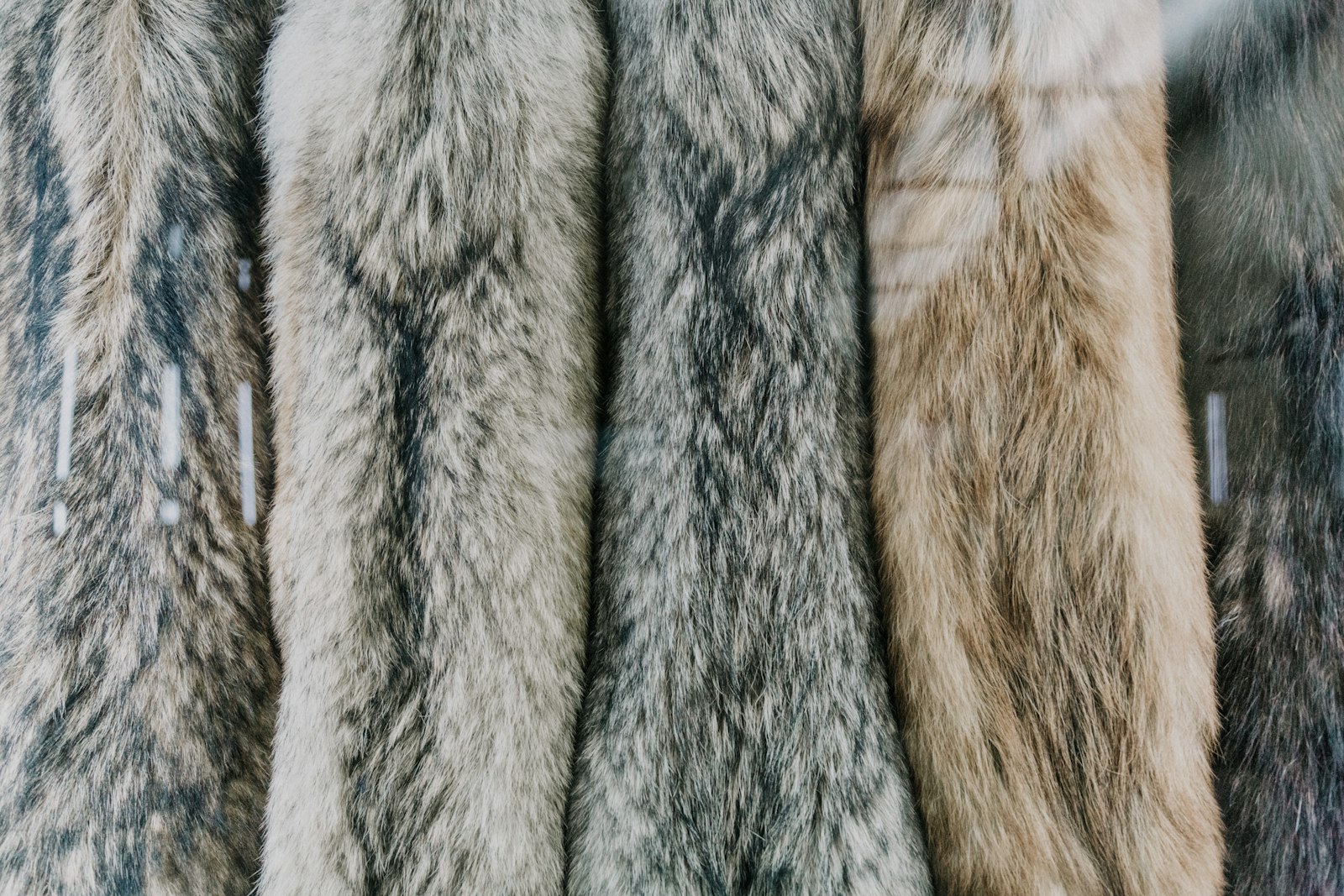
Most conversations about fur collapse into two shouting positions before anyone has said anything useful. One side treats the question as settled and the other treats any question as an attack. Neither helps you decide what to wear, what to buy, or what to pass down. If you are weighing a fur purchase — or quietly wondering whether you should feel bad about the one already in your closet — you deserve better than slogans. The real question underneath "is fur ethical" is narrower and harder: how was this specific animal raised and killed, how was this specific pelt traced, how long will this specific garment last, and what would you have bought instead? This guide works through those core questions in order. It covers what certified welfare standards actually require, why traceability matters more than any label, how fur and faux fur compare on environmental terms, and what changes when a coat is built to be inherited rather than replaced.
The Real Question Behind "Is Fur Ethical"
Ethics is not a category you assign to a material. It is a set of conditions you verify. Wool, leather, cotton, down, polyester, and fur can each be produced in ways that range from defensible to indefensible. The material name tells you almost nothing about the conditions behind it.
That is why the fur debate so often stalls. People argue about fur as a concept while the meaningful differences live at the level of the individual supply chain: which farm, which welfare standard, which auction, which tanner, which pair of hands. A pelt with no documented origin and a pelt traceable to an audited Nordic auction are not the same product, even though both are called fur. To better understand our commitment to transparent supply chains, you can read more about our brand.
So the useful version of the question is: what would I need to know about this garment to feel settled about owning it? For most thoughtful buyers, four things answer it — animal welfare standards, provenance and traceability, environmental cost, and lifespan.
1. Animal Welfare: What Certified Standards Actually Require
The strongest argument against fur concerns animal welfare, and it deserves a direct answer rather than a deflection. Where fur is farmed, the welfare question turns on housing, enrichment, veterinary care, transport, and slaughter method — and those conditions vary enormously between operations and between regions.
Certification schemes exist precisely to set a floor under those conditions. In the Nordic countries, farm-level programs combine third-party inspection with on-farm requirements covering housing space, environmental enrichment, health monitoring, and humane euthanasia. Compliance is audited rather than self-declared, and farms that fail inspection lose access to the auction houses that sell their pelts.
That is a meaningful mechanism, but it is not a moral blank check. Certification improves conditions; it does not eliminate the fact that an animal is killed. If your position is that no use of animal fur is acceptable under any conditions, no audit will change your mind. What certification does is separate supply chains that meet an inspected standard from those that cannot document anything at all.
For buyers in the middle — those who accept animal materials in principle but want to know the animal was raised and killed under supervision — the practical takeaway is simple: ask for the origin. A seller who cannot name the auction house or the certification behind a pelt has given you no basis to judge anything regarding ethical fur sourcing.
- Third-party inspection: Welfare standards are verified by independent auditors, not declared by the farm itself.
- Housing and enrichment: Requirements address space, environment and species-typical behavior, not just survival.
- Health and veterinary care: Regular monitoring and treatment obligations are part of the standard.
- Slaughter method: Humane euthanasia protocols are specified and inspected.
- Consequence for failure: Farms that fail are excluded from the auction system.
2. Traceability: Why Audited Auctions Change the Math
Provenance is the part of the fur conversation that gets the least attention and matters the most. A claim you cannot trace is a claim you have to take on faith, and faith is a poor foundation for a purchase meant to last decades.
The Nordic auction system is the clearest example of traceability in practice. Pelts are consigned to audited Nordic fur auctions that require farm certification as a condition of sale, graded and sorted on-site, and sold with documentation linking the lot back to its source. The auction house becomes a chokepoint: if a farm cannot meet the standard, its pelts do not enter the room.
Seasonality is the second half of the story. Fur-bearing animals grow their densest, most durable coats in response to cold, and pelts taken in season are stronger and better insulated. Securing proper winter pelt traceability is not a marketing flourish — it is a quality decision that happens to be visible in the documentation, as seen in pieces like the VP Blanc Fox Outerwear.
Traceability converts an abstract debate into a concrete check. You are not being asked to trust the word "ethical" on a hangtag. You are being asked whether the seller can tell you where the pelt came from, when it was taken, and who graded it.
- Audited source: Every pelt traceable to a farm that passed certification inspection.
- Auction documentation: Sale records link the lot to its origin rather than ending at a broker.
- In-season selection: Winter pelts only, taken when the coat is at full density.
- Hand grading: Skins stretched, matched and graded by hand under northern light before selection.
3. Environmental Impact: Real Fur vs. Faux Fur
The environmental case is more contested than either side usually admits, largely because the comparison depends on what you measure and over what period. Two variables dominate: the material's production footprint and how many years the garment stays in use.
The Problem with Faux Fur
Faux fur is typically made from synthetic polymers derived from petroleum. It avoids animal use entirely, which is the primary choice for buyers prioritizing absolute non-animal origin. However, its profile is shaped by the fact that it is a plastic textile: production is energy-intensive, and the garment does not biodegrade at the end of its life. Over time, faux fur sheds microplastics into water systems and persists indefinitely as landfill waste.
Is Real Fur Sustainable?
Real fur, being a natural protein fiber, behaves differently in disposal — it biodegrades naturally over time. While real fur carries its own initial agricultural footprint (feed, housing, and land), its longevity creates a genuine structural advantage. A coat worn for thirty years and then repaired has a radically different per-year impact than a synthetic coat replaced every three seasons.
| Feature / Metric | Real Fur (Certified Sourced) | Faux Fur (Synthetic)Faux Fur (Synthetic) | Impact Verdict |
|---|---|---|---|
| Animal Use | Involves animals raised under audited welfare standards | No animal use | Favors Faux Fur for absolute vegan preference |
| Material Origin | Natural protein fiber from certified farms | Petroleum-derived synthetic polymers | Natural origin vs. fossil-fuel dependency |
| Traceability | Documented back to farm and auction lot | Rarely traceable across supply chains | Clear advantage for certified real fur |
| Lifespan | Decades; fully repairable, restorable, and let-out | 2–5 seasons; difficult to repair when matted | Longevity heavily favors natural fur |
| End of Life | Biodegrades naturally as organic material | Persists indefinitely in landfills as plastic | Biodegradability favors natural fur |
| Per-Year Footprint | Decreases significantly the longer it is worn | Remains high due to frequent replacement cycles | Longevity lowers real fur's annual impact |
4. Vintage Fur & Alternative Materials: How Do They Compare?
To fully evaluate whether fur is ethical, one must look beyond standard retail options to vintage, secondhand, and alternative fur types.
Is Buying Vintage Fur Ethical?
For many ethical consumers, buying vintage or pre-owned fur represents the most sustainable choice. Reusing an existing fur garment requires no new animal farming, consumes zero new agricultural resources, and prevents a long-lasting item from going to waste. If your primary concern is resource consumption, vintage fur provides a zero-impact luxury alternative. You can explore related perspectives in our main journal.
Alpaca, Coyote, and Wild Sourcing Trade-Offs
Different animal furs carry distinct ethical profiles:
- Alpaca Fur: Often sourced as a byproduct of natural mortality or shearing in South American farming communities, offering high ethical traceability.
- Coyote & Wild Fur: Typically derived from population control and wildlife management programs rather than farming, eliminating agricultural feed footprints while requiring humane management standards.
5. The Longevity Argument: Fur Made to Be Inherited
There is a version of the fur question that only makes sense once you accept the garment will outlive you. A coat worn for two seasons and thrown away is a different ethical object from a coat worn for forty years, repaired twice, and handed to a daughter.
That distinction is engineered through heritage techniques showcasing true luxury fur craftsmanship ethics. Pelts are cut into ribbons and re-sewn with thousands of invisible hand stitches — a traditional let-out technique that shapes the garment without slicing through fur density. No machine touches the fur during this process.
To maintain that longevity across generations, proper care is essential. We recommend following our official care guide to ensure your piece retains its structure and fur density over time.
- Hand construction: Pelts let out and re-sewn with thousands of hand stitches.
- Signed and dated: Monogrammed with the year of making on every garment.
- Workmanship promise: Storage, brushing, and restoration covered for life.
Styling and Silhouette Selection for Responsible Buyers
Responsible ownership also means buying pieces tailored precisely to your proportions so they remain permanent staples in your wardrobe rather than impulse purchases.
When selecting silhouettes, ensuring a proper fit prevents unnecessary alterations later. You can reference our complete size guide before choosing a design.
For statement outerwear, you can explore our complete collection of luxury coats designed with timeless silhouettes in mind.
How to Evaluate Any Fur Purchase
Run these six questions against any seller before making a purchase. The answers should be specific — naming an auction system, certification standard, or repair policy — rather than vague marketing terms.
- Where did the pelts come from? Look for named auction houses and audited certifications, not generic "ethical" claims.
- When were they taken? In-season winter pelts are denser and far more durable.
- Who graded them?** Hand grading under controlled light indicates quality craftsmanship.
- Who graded them? Hand grading under controlled light indicates quality craftsmanship.
- How was it constructed? Ask if the fur was let out and hand-stitched or assembled from cheap cut panels.
- What happens after purchase? Ongoing storage, brushing, and repair terms tell you if the piece is built to last.
- How many are made? High mass production and hand-sewn luxury standards cannot coexist.
- If you have questions about order policies or shipping procedures before making a decision, you can review our returns policy or get in touch via our contact page.
Frequently Asked Questions (FAQ)
Is fur ethical?
It depends entirely on the specific supply chain, not just the material name. Fur from farms passing third-party welfare inspections, sold through audited auctions with documented provenance, and made into a garment designed to last for decades is a defensible choice for many buyers. Undocumented fur is not.
Is real fur more sustainable than faux fur?
Neither material wins on every metric. Faux fur avoids animal use but relies on petroleum polymers that shed microplastics and persist in landfills. Real fur involves animal farming but biodegrades naturally and lasts for generations. The decisive factor is per-year impact through repair and longevity.
Is buying vintage fur ethical?
Yes, buying vintage fur is widely considered one of the most ethical ways to wear fur. It extends the lifecycle of existing materials without requiring new resource consumption or animal farming.
What does an audited Nordic auction guarantee?
It guarantees that welfare certification was a mandatory condition of sale, pelts were inspected and documented, and non-compliant farms are excluded from the system.
Why do winter pelts matter?
Animals grow their thickest, most insulating coats in response to winter cold. In-season pelts create significantly stronger, longer-lasting garments suitable for generational inheritance.
Conclusion
Whether fur is ethical is not a broad debate about a material in the abstract. It is a specific question about verified welfare standards, documented provenance, full lifecycle environmental impact, and construction quality.
Buyers seeking a defensible choice should always ask for the auction, the season, the grading method, and the long-term repair terms before investing. To view our full collection of handcrafted luxury outerwear, visit the Furixe shop.