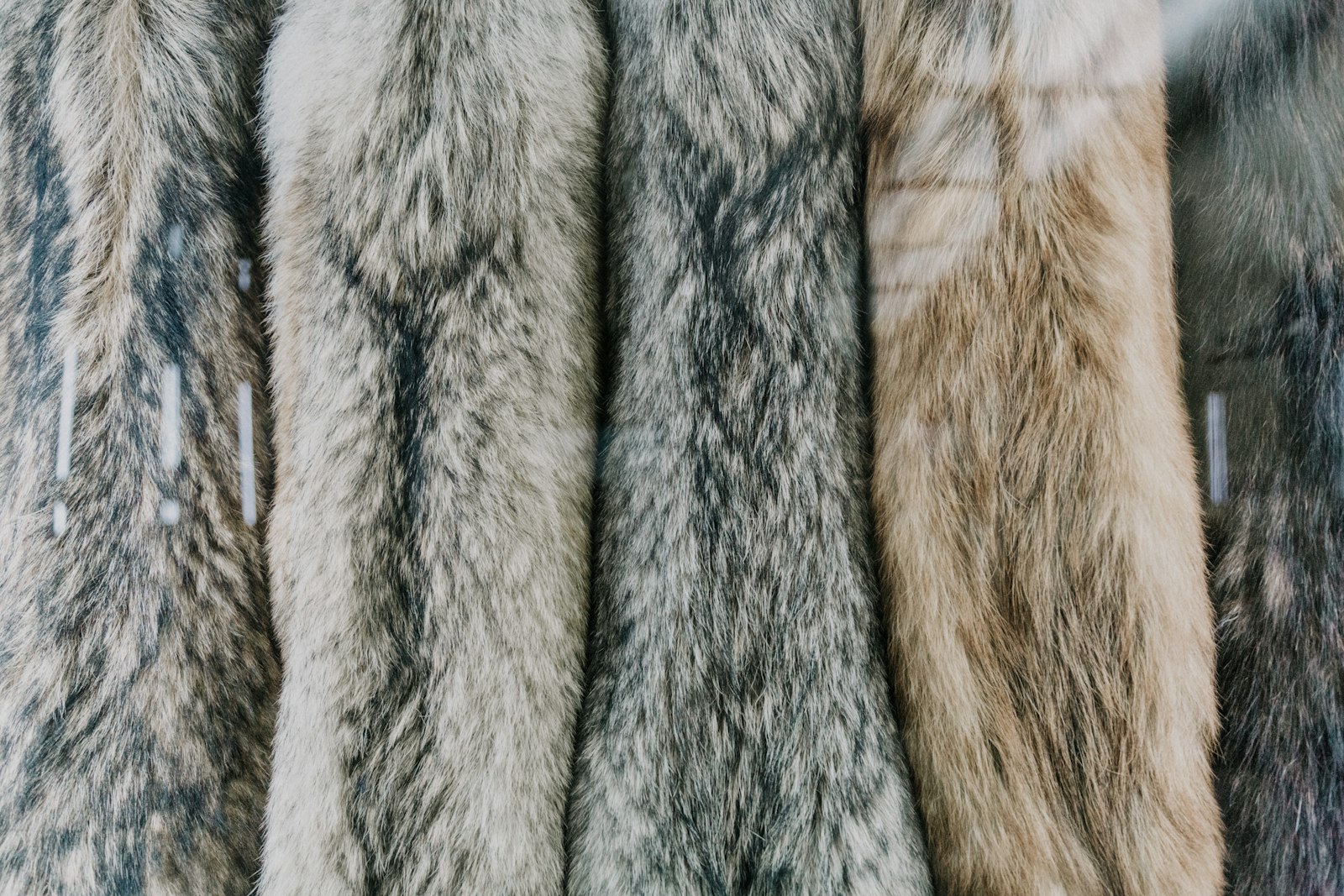
A fur coat is the most expensive garment most people will ever own, and the one most likely to be bought in the wrong size. The reason is simple: fur does not behave like fabric. Wool and cashmere stretch, drape and forgive. A fur coat is a structured skin garment built from matched pelts, and it holds the line it was cut to. Buy two sizes off and no tailor can quietly rescue it the way they can a blazer. That problem lands hardest on petite and plus-size women. Standard fur sizing is built around a narrow band of average heights and measurements, so a 5'2" frame gets swallowed by a coat cut for 5'8", and a full figure gets a coat that closes but pulls across the back and rides up at the hem. Both look like a fit problem. Both are actually a pattern problem — and pattern is something a furrier controls. This guide breaks down how fur sizing actually works, what to measure before you buy, the specific length, sweep and sleeve corrections that flatter petite frames and full figures, what can and cannot be altered after the fact, and the questions to ask any furrier before money changes hands.
Why Fur Sizing Doesn't Work Like Fabric Sizing
Fur is sold in numbered sizes, but those numbers describe the finished garment, not your body. Two houses can label the same coat a size 8 and produce two different measurements across the shoulders. There is no enforced standard, which is why a fur coat should always be judged on its actual dimensions rather than its tag.
The material itself is the second variable. A pelt is a skin with a nap — the direction the hair grows — and a coat built from let-out pelts (skins cut into narrow ribbons and re-sewn in thousands of invisible hand stitches) has a different hand and weight than one built from whole skins. Let-out work makes a coat lighter and more fluid, which matters enormously on a smaller frame.
To understand why a natural skin garment behaves differently than woven textiles, consider these core physical factors:
- No stretch: Fabric garments relax into the body over time. Fur keeps the shape it was cut to, so the fit you buy is the fit you keep.
- Nap direction: Hair lies one way. A coat assembled with the nap running correctly hangs and reflects light evenly; get it wrong and the garment looks patchy.
- Weight: Fur has real mass. On a petite frame, an ounce of unnecessary weight in the shoulders reads as bulk.
- Volume is built in: Fur adds thickness everywhere it sits. A coat that measures exactly your chest circumference will not close.
Measure These Five Numbers Before You Look at a Single Coat
Before you browse anything, take five measurements over the clothing you would actually wear under the coat — a fine knit or a dress, not a bulky sweater. Use a soft tape, keep it level, and have someone else read the numbers if you can. Write them down; you will use them at every step.
- Shoulder width: From the bony point of one shoulder to the other, across your back. This is the single hardest measurement to alter in fur, so it drives everything.
- Bust circumference: Around the fullest part, tape level, not pulled tight. Add 4 to 6 inches for a comfortable fur fit — more if you plan to layer.
- Natural waist: Your actual waist, not where a coat hem sits. This tells a furrier where to shape the sweep.
- Hip circumference: Around the fullest part of the seat. On a plus-size frame this often exceeds the bust and should govern the coat's lower sweep.
- Height and desired coat length: Measure from the top of your shoulder down to where you want the hem to land, in inches. This number is more useful than a size label.
- To explore various silhouettes and compare detailed measurement specs across our outerwear range, explore our full coats collection.
Getting a Fur Coat Fit for Petite Women: Length, Sweep and Sleeves
Petite frames are not small versions of average frames — they are shorter, and proportion changes with every inch. A coat that hits mid-calf on a 5'8" woman can hit ankle on a 5'2" woman and erase her entirely. The fix is not to buy a smaller size; it is to control three specific dimensions.
- Hem placement: On a petite frame, a hem at or just above the knee preserves leg line and keeps the coat from reading as a tent. Mid-calf works if the coat is narrow through the body. Full-length fur on a short frame needs a slim sweep or it overwhelms.
- Sweep and flare: Ask for a straighter, narrower sweep. Volume that reads as luxurious on a tall frame reads as width on a short one. A let-out construction helps here because it removes bulk without removing warmth.
- Sleeve length: Sleeves should end at the wrist bone, not the knuckle. Long sleeves on a petite frame bury the hands and shorten the whole silhouette. Sleeve shortening is one of the most reliable fur alterations.
- Shoulder line: A petite frame usually needs a narrower shoulder and a higher armhole. This is the one adjustment that is genuinely difficult after construction, so it should be specified before the coat is cut.
- Vertical detail: A collar that sits high and close, or a coat with a defined vertical seam, draws the eye up and down rather than across.
Fit Priorities for Plus-Size Frames
Plus-size fur fit is not about sizing up. It is about getting the coat to close cleanly without strain, to sit level at the hem, and to avoid the two failure modes that show up most often: a back that pulls across the shoulder blades and a hem that rides up in front because the coat is fighting the bust.
The governing measurement is usually the hip or the bust, whichever is larger — not the size on the tag. A furrier working by hand can cut to that number. A rack coat cannot.
- Close without strain: A fur coat should fasten with ease and lie flat at the closure. If the fronts gap or the hook pulls, the coat is too small regardless of the label.
- Level hem: Put the coat on and check the hem in a mirror from the side. If it rises at the front or dips at the back, the sweep is wrong for your shape.
- Back ease: Ask for enough room across the upper back to raise both arms to shoulder height without the coat lifting off your neck.
- Armhole and sleeve: A generous armhole with a properly set sleeve prevents the pinched, padded look. Sleeve width should clear a sweater without billowing.
- Weight distribution: A heavier fur on a full figure should be balanced — a let-out coat or a lighter pelt keeps the garment from dragging at the shoulders by the end of an evening.
- Proportion, not coverage: A slightly shorter hem with a clean, narrow line often flatters more than a long coat chosen to cover.
What a Furrier Can Change — and What They Cannot
Fur alterations are real and routine, but they are not unlimited. Knowing the difference before you buy saves you from a coat that never quite works.
The good news is that a hand-sewn coat is built to be worked on. A well-constructed garment can be adjusted across decades rather than seasons if it receives proper maintenance.
For comprehensive advice on protecting your leather suppleness and scheduling professional adjustments, read our full fur care guide.
- Straightforward: Sleeve length, hem length, taking in or letting out side seams, adjusting the closure position, replacing a lining.
- Possible but skilled: Reshaping the sweep, narrowing the body through the waist, adjusting a collar.
- Difficult or impossible: Widening the shoulders, changing the armhole depth after construction, adding length where there is no pelt to add, correcting a coat cut with the nap running inconsistently.
- Rule of thumb: Anything that removes material is easier than anything that adds it. Buy slightly generous and take it in, never the reverse.
Traditional Rack Sizing vs. Made-to-Measure Fur
The real trade-off is not price alone — it is who absorbs the risk of a bad fit. Here is how the two paths compare on the dimensions that actually decide whether you wear the coat.
Fit Basis
- Standard Numbered Size: Fixed to average industry standards.
- Made-to-Measure: Cut directly to your five personal measurements, eliminating proportion mismatches.
Shoulder and Armhole
- Standard Numbered Size: Fixed at construction and nearly impossible to broaden later.
- Made-to-Measure: Specified before cutting, making the hardest alteration a non-issue.
Hem Length
Standard Numbered Size: Chosen from what is currently in stock.
Made-to-Measure: Set precisely to your height and body proportion so both petite and tall frames get a correct hemline.
Sweep and Volume
- Standard Numbered Size: Uses one house pattern for all body types.
- Made-to-Measure: Adjusted to your frame — full figures avoid front pull while petite frames avoid overwhelming bulk.
Lead Time & Production
- Standard Numbered Size: Immediate delivery if in stock.
- Made-to-Measure: Requires planning ahead, as small-batch artisan ateliers produce limited runs with multi-day inspection cycles.
How Furixe Approaches Fit, From Bredgade
Furixé has hand-sewn fur hats and coats in its atelier on Copenhagen's Bredgade since 1968, and the same families of furriers have worked those benches across the decades. Nothing about the process is rushed, and nothing about it is anonymous.
Every pelt is a winter pelt, bought in season directly from audited Nordic auctions and traceable to an audited source. Each skin is stretched, matched and graded by hand under northern light before it is cut into ribbons and re-sewn in thousands of invisible hand stitches. No machine touches the fur. Every finished piece then rests a full season before it is brushed and inspected over four days, and each garment is signed with the monogram and the year of its making.
For fit, that process matters in two ways. First, hand construction is what makes a genuine made-to-measure cut possible — a furrier working by hand can shape a shoulder and a sweep to a specific body in a way a production line cannot. Second, the resting and inspection period means a coat is checked as a finished garment, on a form, before it goes anywhere. To explore our heritage and master crafting techniques, visit our page about Furixe.
Frequently Asked Questions (FAQ)
- Should a fur coat fit tight or loose?
- Slightly loose, always. You need 4 to 6 inches of ease over your bust measurement so the coat closes without strain and layers over a knit. A fur coat that fits tight will pull at the closure and ride up at the hem.
- Can a fur coat be shortened for a petite frame?
- — Yes, hem shortening is one of the most common and reliable fur alterations. A furrier removes length from the bottom and re-finishes the edge. What cannot be fixed later is shoulder width and armhole depth, so specify those before the coat is cut.
- Do plus-size fur coats need special construction?
- They need a pattern cut to your largest measurement, usually the hip or bust, rather than a scaled-up average. The visible signs of a correct fit are a level hem, a flat closure, and enough back ease to raise your arms without the coat lifting.
- How do I know if a fur coat is too big?
- If the shoulders extend past your natural shoulder line, if the sleeves cover your knuckles, or if the coat hangs away from your back when you move, it is too large. Taking a coat in is far easier than letting one out.
- How long does a made-to-measure fur coat take?
- Furixe produces twelve pieces twice a year, and every garment rests a full season after sewing before it is brushed and inspected over four days. Plan on weeks rather than days, and start the conversation well before the season you want to wear it in.
Conclusion
Fur does not stretch, drape or forgive the way fabric does, which is exactly why fit has to be solved before the coat is cut rather than after. Measure your shoulders, bust, waist, hips and desired length. Let your largest measurement govern the size, not the tag. On a petite frame, control the hem, the sweep and the sleeve. On a full figure, protect the back ease and the level hem. And remember that a furrier can take a coat in far more easily than they can let one out — so buy to the shoulder and the armhole, and adjust everything else.
Start With Your Measurements, Not a Size Label
If you are between standard sizes, or simply outside the range that rack fur was built for, that is not a reason to settle for an approximate fit. Send Furixe your five measurements and let our atelier tell you what can be cut directly to your body — hand-sewn from audited winter pelts, rested a full season, and signed with the year of its making.
If you have questions about custom sizing or need personal fitting assistance, please reach out directly through our contact page to connect with our specialists.