A fur coat is one of the few wardrobe purchases whose value is measured in decades, not seasons. Yet most buyers never get a straight answer to a simple question: how long does a fur coat last? The honest range is wide — from a decade to well past half a century — and the difference between the two ends is rarely the fur itself. It is the leather underneath. A pelt's guard hairs and underfur can look pristine for forty years while the skin they grow from quietly dries, stiffens, and tears. That is why two coats bought the same year can part ways so dramatically: one is stored and serviced, the other is left on a wire hanger in a heated closet. What follows is a realistic timeline, decade by decade, of what happens to a fine fur coat — and what you can do at each stage to keep it in the upper range. This guide breaks down the full lifespan of a luxury fur coat, the care habits that shorten or stretch it, and how to tell when a piece needs restoration rather than replacement.
The Short Answer: 30 to 60 Years, and Often Longer
A well-made fur coat, worn regularly and serviced properly, will hold its structure and appearance for roughly 30 to 60 years. The fur itself — the hair — is remarkably durable. The limiting factor is the leather: the tanned skin that holds the hairs in place and gives the garment its shape.
That range is not a marketing claim. It reflects the physical reality of tanned pelts, which are organic material subject to drying, oxidation and flex fatigue. A coat that is cleaned, conditioned and stored correctly each year ages at a fraction of the rate of one that is not.
There is also a category of fur coat that outlives its first owner. Heirloom pieces from the mid-twentieth century are still worn today, often after a restoration that replaced linings, reinforced seams, and reconditioned the leather. Longevity, in other words, is not a fixed property. It is a practice. To learn more about our philosophy on structural durability, visit about our brand.
The Decade-by-Decade Timeline
Think of a fur coat's life in phases. Each one has a distinct set of risks, and each is manageable if you know what to watch for.
- Years 0–5 (Prime): The coat is at its most supple and uniform. The main risk is neglect, not wear — skipping annual cleaning or storing it in a heated closet. Keep it out of direct sunlight and never hang it on a thin wire hanger, which distorts the shoulders.
- Years 5–15 (Settled): The leather begins its slow loss of natural oils. Hairs may shed lightly at friction points — under the arms, at the collar, along the cuffs. This is normal and reversible with conditioning. This is the decade when annual professional care pays off most.
- Years 15–30 (Mature): Seams and linings typically need attention first, not the fur. A lining replacement is routine and inexpensive relative to the coat. The leather may start to feel slightly firmer in areas that flex most. Storage conditions now matter more than wear frequency.
- Years 30–50 (Vintage): The coat is genuinely old and often beautiful for it. Expect the leather to need professional reconditioning, and expect some thinning at high-flex zones. Many coats at this stage are restored and worn as statement pieces.
- Years 50+ (Heirloom): At this point the coat is a document as much as a garment. Restoration — new lining, seam reinforcement, leather conditioning — can return it to wearable condition. The fur hair itself is often still intact; the leather is what is being saved.
What Actually Shortens a Fur Coat's Life
Most premature fur deaths are not caused by wearing the coat. They are caused by how it is kept when it is not being worn. Four habits account for the majority of avoidable damage.
- Heat and dry air: Central heating pulls moisture from the leather. A coat stored in a warm, dry closet will stiffen years earlier than one kept cool and dark.
- Plastic garment bags: These trap moisture and can cause the leather to dry unevenly. Use a breathable cotton or canvas bag instead.
- Improper hanging: Wire hangers and thin hooks create stress points at the shoulders. Use a broad, padded hanger that supports the full shoulder line.
- Deferred cleaning: Oils from skin, perfume and the environment work into the fur and leather over time. Annual professional cleaning removes them before they cause damage — waiting three or four years lets them set.
How Fur Type Changes the Timeline
Not all furs age at the same rate. The differences come down to the length and density of the hair and the thickness of the leather, which vary by species and by the season the pelt was taken.
This is one reason winter pelts matter. Fur taken in season has a denser, more fully developed coat, and the leather beneath it is typically stronger. A coat built from winter pelts starts its life with more margin.
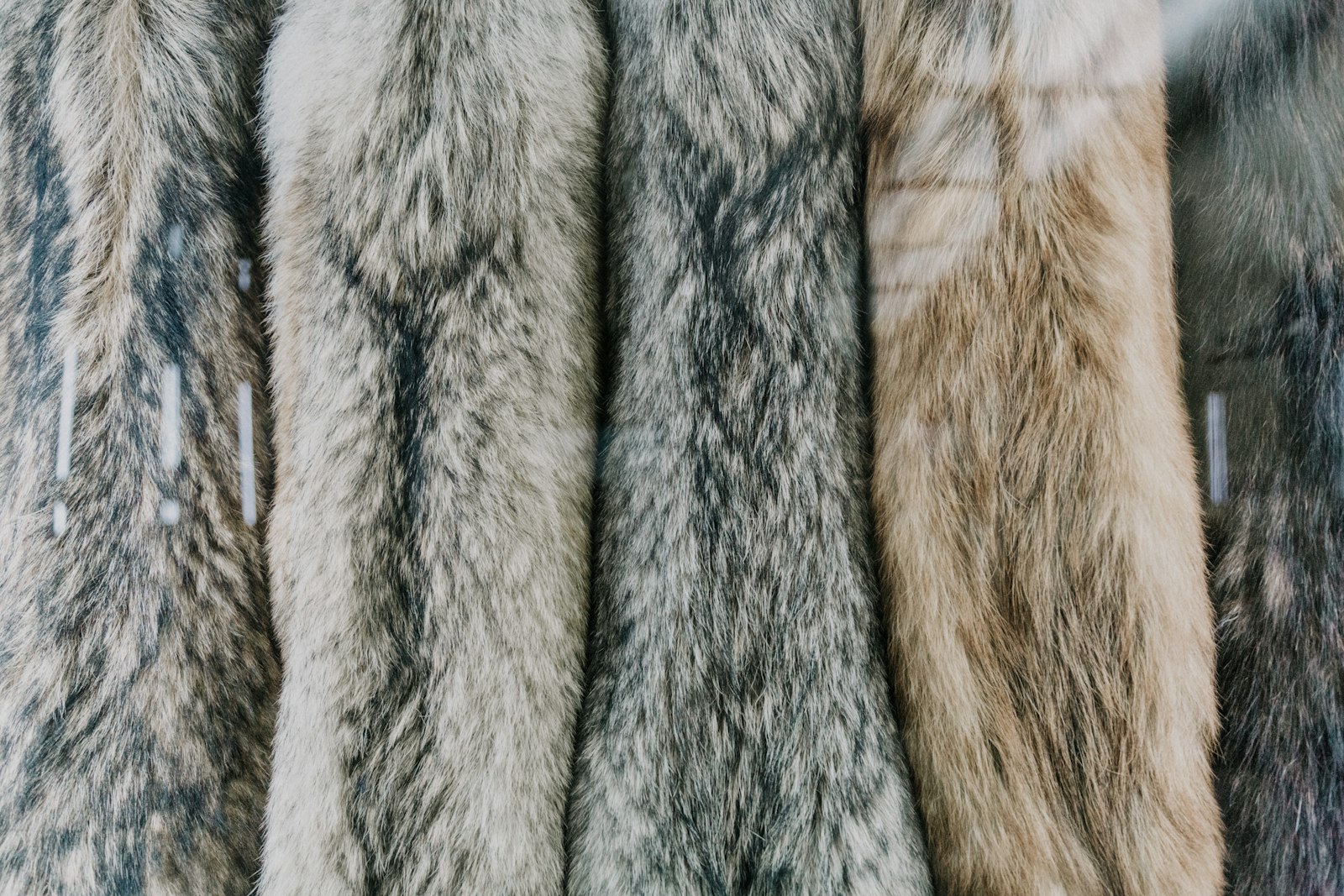
- Long-haired furs (e.g. fox, coyote): Dramatic and resilient in appearance, but the longer hairs are more prone to matting and to catching on friction points. They benefit from regular brushing.
- Short, dense furs (e.g. mink, sable): The workhorses of longevity. Dense underfur protects the leather, and the shorter guard hairs shed less. These are the furs most likely to reach 50 years.
- Curly and textured furs (e.g. lamb, broadtail): Beautiful and durable, but the surface can flatten with pressure. Store them without weight on the pile.
The Care Habits That Add Decades
If you want your coat in the upper half of the lifespan range, the routine is not complicated. It is just consistent. The single most important habit is annual professional care — cleaning and conditioning at the end of each winter, before storage.
The second is storage. A fur coat should spend its off-season in a cool, dark, well-ventilated place, in a breathable bag, on a broad hanger. That combination alone will separate a 25-year coat from a 50-year one. For step-by-step preservation instructions, review our comprehensive care guide.
- Clean before you store: Never put a coat away with surface oils or perfume residue on it. Those set over the summer.
- Brush with the grain: A soft fur brush, used gently in the direction of the hair, lifts dust and prevents matting.
- Avoid crowds and abrasion: The most common wear points are where the coat rubs against itself or against bags and seatbelts. Rotate how you carry a shoulder bag.
- Service the lining early: A torn lining puts stress on the fur seams. Repair it when you notice it, not at the end of the season.
When to Restore Instead of Replace
There is a moment in every long-lived fur coat's life when the question shifts from "how long will it last" to "is it worth restoring." The answer is usually yes, provided the leather has not begun to tear.
Restoration typically involves reconditioning the leather, reinforcing or re-sewing seams, replacing the lining, and cleaning the fur. Done well, it can add another decade or more of wear. Done poorly — by a general dry cleaner without fur expertise — it can finish the coat off.
The test is simple: run your hands along the inside of the coat. If the leather feels supple and yields, restoration is straightforward. If it cracks or crumbles, the coat is at the end of its wearable life and is better preserved as a display piece or repurposed. If you are considering structural updates or resizing, explore our dedicated article on fur coat alterations.
Why Hand Construction Changes the Math
The way a coat is built affects how long it lasts. A hand-sewn coat uses thousands of individual stitches that flex with the leather rather than fighting it. Machine stitching, by contrast, creates a rigid line that concentrates stress at each puncture point.
At Furixe, every coat is hand-sewn in the atelier — no machines touch the fur. The pelts are cut into ribbons and re-sewn in thousands of invisible hand stitches, a technique that allows the garment to move as a single piece. The house buys only winter pelts at audited Nordic auctions, and every pelt is traceable to its source.
Each finished piece then rests for a full season before it is brushed and inspected over four days. That rest period lets the leather and stitching settle, which is one reason a Furixe coat starts its life with more structural margin than a coat rushed to market. Every garment is signed with the monogram and the year of its making — a record of when its timeline began.
This is also why the workmanship promise matters. Furixe covers storage, brushing, and restoration for as long as you own the piece, which means the care habits described above are not something you have to manage alone.
Frequently Asked Questions (FAQ)
- How long does a fur coat last if worn every winter?
- A well-made coat worn regularly and serviced annually will typically last 30 to 60 years. The limiting factor is the leather, not the fur hair, so consistent conditioning and proper storage are what keep it in the upper range.
- Can a fur coat last 100 years?
- Some do. Coats from the early twentieth century survive in wearable condition after restoration, though most are preserved as heirlooms rather than worn daily. Reaching that age depends on storage conditions across every decade of the coat's life.
- Does a fur coat go bad if it is not worn?
- Yes, if it is stored badly. Leather dries out and stiffens whether or not the coat is worn. A coat kept in a hot, dry closet can deteriorate faster than one worn regularly and serviced.
- How often should a fur coat be cleaned?
- Once a year, at the end of winter, before it goes into storage. This removes oils and residue before they set during the off-season.
- Is it worth restoring an old fur coat?
- Usually yes, if the leather is still supple. Restoration — reconditioning, seam repair and a new lining — costs far less than a new coat and can add another decade of wear. If the leather cracks when flexed, the coat is past wearable restoration.
Conclusion
How long a fur coat lasts is not fixed at the moment of purchase. It is set by a combination of how the coat was built and how it is kept. A hand-sewn coat made from winter pelts, serviced annually, and stored correctly will hold its shape and beauty for 30 to 60 years — and with restoration, it can pass to the next owner. The fur itself is rarely the problem. The leather, and the care it receives, decide everything.
Begin a Coat Made to Be Inherited
If you are choosing a fur coat you intend to keep for decades, the construction and the care promise matter as much as the fur. Furixe hand-sews coats using only winter pelts from audited Nordic auctions, with a workmanship promise covering storage, brushing, and restoration for as long as you own the piece.
Browse our complete range in the luxury fur shop or visit the main Furixe Homepage to start a piece whose timeline begins with you.