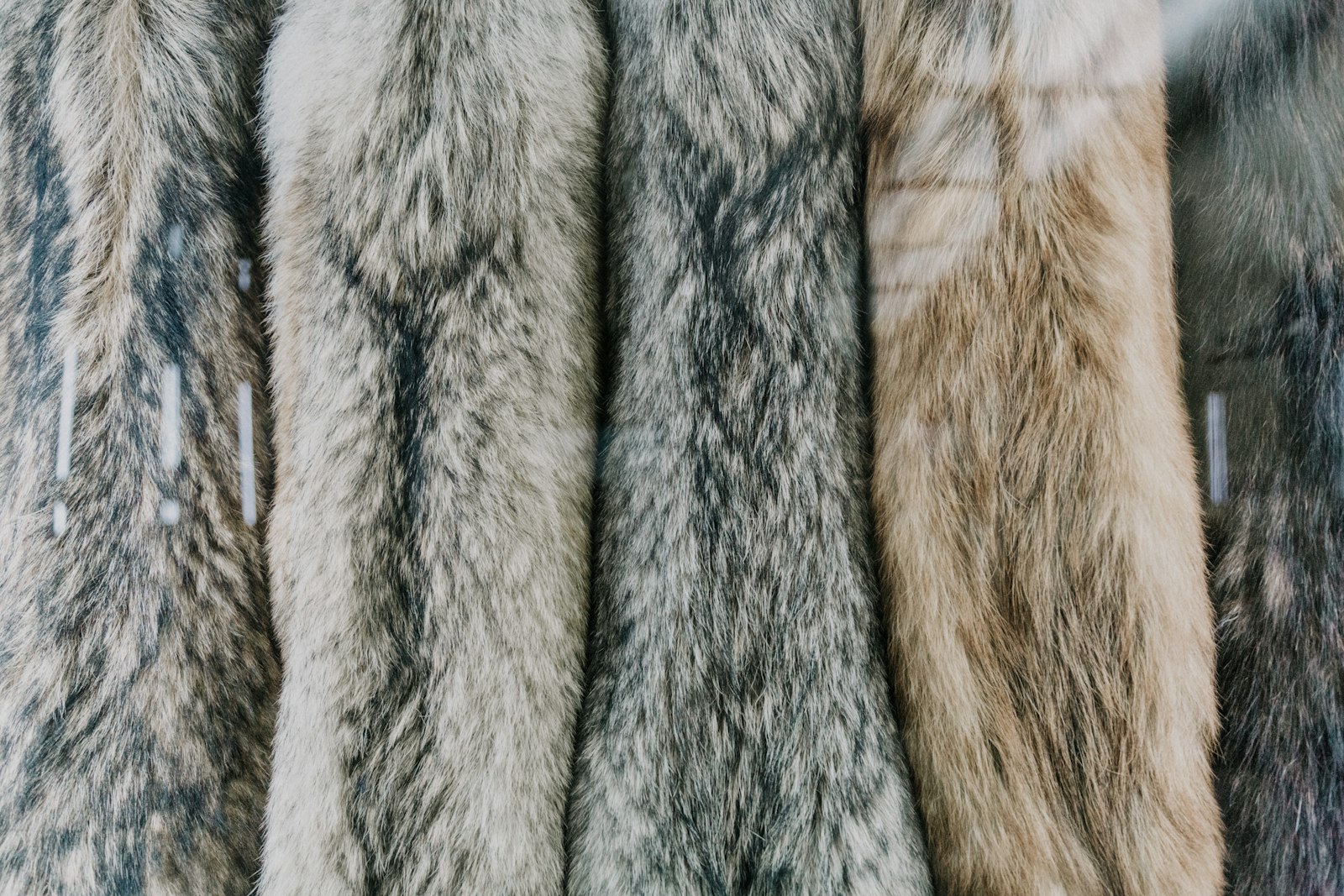
Two coats can look identical on a rail and be worth very different amounts. The difference is almost never visible at a glance, which is why the trade still grades by hand and why a price difference is usually a fact rather than a markup.
Winter pelts and the season they were taken
Fur is at its fullest in the depth of winter, when the animal grows the dense underfur that insulates it. A pelt taken in season is thicker, more even and far more durable than one taken at the edges of the year, and the difference persists for the whole life of the garment.
We buy only winter pelts, and we say so because most of the market does not. A summer pelt can be made to look acceptable in a photograph and will be visibly thin within two seasons.
What to look for, in order
Start with the leather, not the hair. Fold a corner of the garment and press the skin: it should give, then return, like good glove leather. If it feels papery, or if you can hear it crackle when folded, the skin has dried out and no amount of brushing will bring it back.
Then look at the hair. Run a hand along the lay and check the density at the base of the fur — the underfur is the insulation and the first thing to go in a poor pelt. Finally, look at the garment as a whole: colour and texture should run continuously, with no banding where batches were mixed.
- Skin first: it should give and return like glove leather, never crackle
- Density at the base, which is the true measure of warmth
- Continuity of colour across the whole garment, with no visible batching
- Even guard hair length, checked along the lay rather than across it
Why hand-grading still decides the price
Machine sorting measures length and colour, and it is useful for that. It cannot feel the leather or judge how a pelt will move, and those are the two things that determine whether a coat survives thirty years.
By the time a coat reaches you, the grading has already happened and it is invisible. That is the point. What you are buying, when a Furixé piece costs more than the one beside it, is a better batch of pelts and several hundred metres of handwork you will never be able to see.