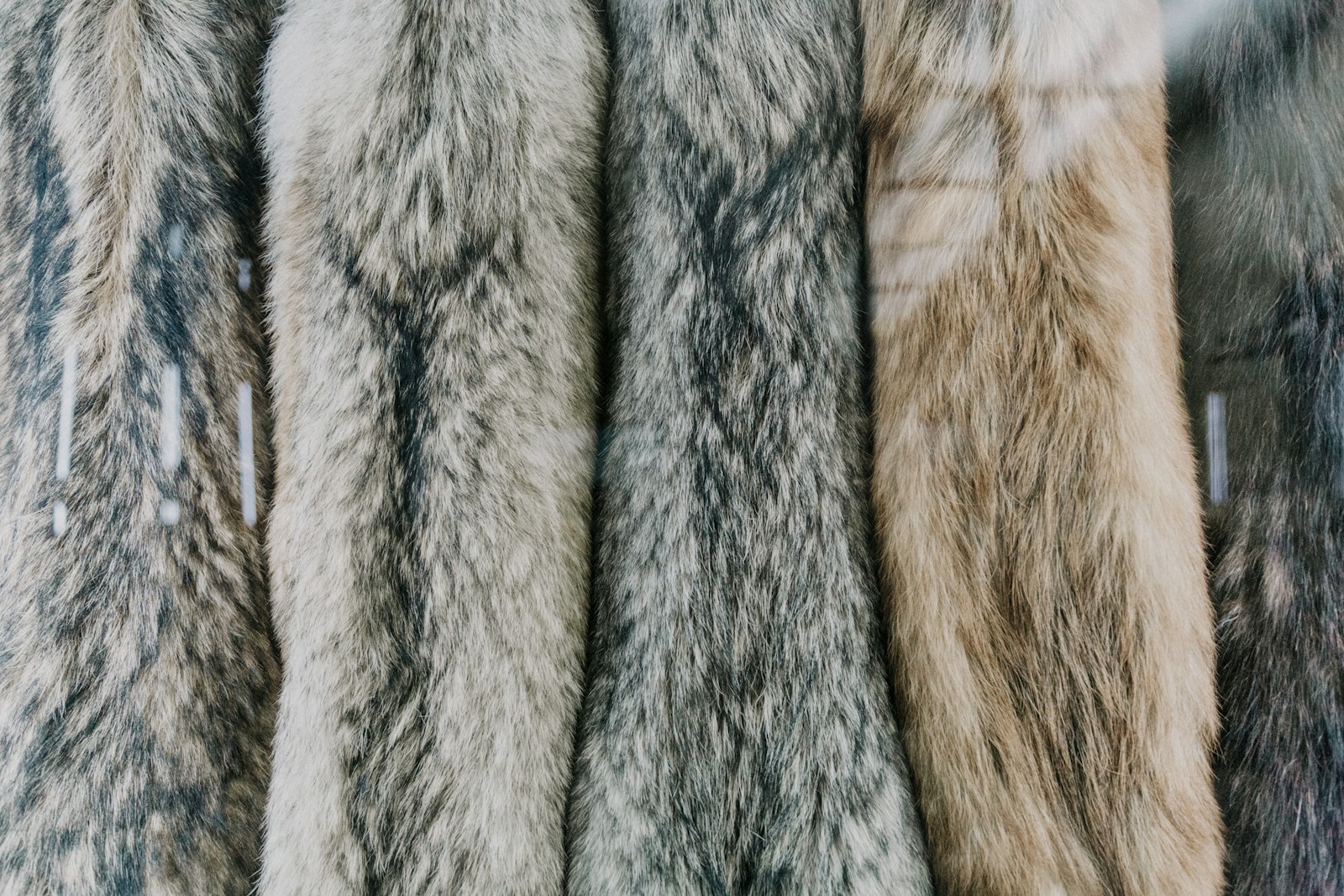
If you are considering a fur piece, the question that matters most is not the price tag or the silhouette. It is where the pelts came from, and whether anyone independent verified it. Without that answer, you are buying on trust alone, and trust is exactly what a vague supply chain cannot give you. Ethical fur sourcing is not a marketing phrase. It is a chain of verifiable steps: audited auctions, documented welfare standards, traceable pelts, and a maker who can tell you which auction house sold the skins in your coat. When any link is missing, the buyer absorbs the risk. This guide explains what audited Nordic fur auctions actually are, what the audits cover, how traceability works from pelt to finished garment, and the specific questions to ask before you commit to a piece you intend to keep for decades.
Why Ethical Fur Sourcing Starts at the Auction
The word "audited" gets used loosely, so it is worth being precise. In the Nordic fur trade, auditing refers to third-party certification and inspection of farms and auction processes against published welfare criteria. The audits are not a single stamp; they are a set of checks applied at the farm level and verified again at the auction.
The practical result is that a certified pelt carries a documented history before it ever reaches a workshop. That history includes the farm, the certification status, the year and season of production, and the grade assigned at auction.
- Regulated welfare standards: Nordic fur farming is governed by national legislation and certification programs that set requirements for housing, health and handling.
- Independent inspection: Auction houses grade and inspect pelts before sale, creating a documented quality and origin record.
- Origin documentation: Skins are recorded against their farm of origin, which is what makes downstream traceability possible.
- Seasonal selling: Auctions run in season, so buyers purchase pelts at the point of peak quality rather than from year-round stock.
What the Audits Actually Cover
The word "audited" gets used loosely, so it is worth being precise. In the Nordic fur trade, auditing refers to third-party certification and inspection of farms and auction processes against published welfare criteria. The audits are not a single stamp; they are a set of checks applied at the farm level and verified again at the auction.
The practical result is that a certified pelt carries a documented history before it ever reaches a workshop. That history includes the farm, the certification status, the year and season of production, and the grade assigned at auction.
- Farm-level certification: Independent schemes assess housing conditions, animal health, and handling practices against written standards.
- Auction-level verification: Auction houses confirm certification status and record each lot against its farm of origin before sale.
- Grading and inspection: Pelts are assessed for quality, damage and consistency, which also serves as a second check on handling.
- Written records: Documentation travels with the lot, giving the buyer a verifiable chain rather than a verbal assurance.
From Auction Lot to Finished Garment: How Traceability Works
Traceability is only as strong as the maker's record-keeping. A house that buys directly at audited Nordic auctions can tell you which auction sold the skins and which season they came from. That is the standard to hold any furrier to.
At Furixé, every pelt is bought in season from audited Nordic auctions and every skin is traceable to an audited source. The pelts are stretched, matched and graded by hand under northern light in the atelier on Bredgade in Copenhagen, where the samefamilies of furriers have worked the benches since 1968.
Only winter pelts are selected. Fur taken in the cold season is at its fullest and most durable, which is why a winter pelt holds its shape and loft far longer than skins taken out of season. That single choice affects how the garment ages over decades, not just how it looks in the first year.
- Ask for the auction: A traceable house can name the auction and the season. If the answer is vague, the chain is vague.
- Ask about season: Winter pelts are fuller and more durable. Confirm that the maker selects in season rather than buying whatever stock is available.
- Ask who grades the skins: Hand grading and matching under natural light catches inconsistencies that a bulk sort misses.
- Ask what happens after sewing: Resting, brushing and multi-day inspection are the steps that separate a garment made to last from one made to ship.
Hand Craft vs. Industrial Fur Production
Sourcing is half the story. The other half is what happens to the pelt once it is bought. Two houses can buy at the same auction and produce garments with very different lifespans, because the difference lies in the bench work.
The comparison below sets out the real trade-off between an industrial approach and the hand method used at Furixé. Neither column is a moral judgment; they are different products with different economics.
- Construction Machine-sewn panels, Hand-sewn, no machines touch the fur.
- Pelt selection Bulk stock, any season, Winter pelts only, bought in season at audited Nordic auctions.
- Cutting method Straight cut and join, Let-out: pelts cut into ribbons and re-sewn in thousands of invisible hand stitches.
- Finishing Shipped on completion, Rests a full season, then brushed and inspected over four days.
- Output High volume, Twelve pieces produced twice a year.
- Aftercare Limited or none, Workmanship promise covering storage, brushing and restoration for as long as you own it.
The Sofia Buyer's Checklist: Questions to Ask Before You Commit
Buyers in Sofia are well placed to demand provenance. The city has a long history of appreciation for quality outerwear, and a winter climate that makes a fur hat or coat a practical purchase rather than a decorative one. That combination means the piece will be worn hard, season after season, and the sourcing behind it matters more, not less.
Sofia's winters are cold enough that a winter pelt performs the way it was meant to. A coat bought for a Sofia winter should be judged on how it holds up in the fifth season, not the first. Use the checklist below in any showroom, in Sofia or online.
- Name the auction: Ask which audited Nordic auction sold the pelts. A clear answer signals a direct buying relationship.
- Confirm winter pelts: Ask whether the skins were selected in season. Out-of-season fur is thinner and ages faster.
- Request traceability: Ask whether every pelt can be traced to an audited source. "Mostly" is not traceability.
- Ask about hand work: Confirm whether the fur is hand-sewn. Machines compress the leather and shorten the garment's life.
- Ask about aftercare: A workmanship promise covering storage, brushing and restoration tells you the house expects the piece to last.
- Check the signature: A monogram and year of making indicate a house that stands behind individual pieces, not anonymous volume.
Why Made to Be Inherited Changes the Sourcing Math
A garment designed to be passed down changes how you should weigh cost. If a coat lasts one decade, its price is spread over ten winters. If it lasts three, the same price buys thirty. Sourcing and hand construction are what make the longer life possible.
Furixé produces twelve pieces twice a year. That is a deliberate limit: it allows every garment to rest a full season before it leaves the atelier, then be brushed and inspected over four days. Each piece is signed with the monogram and the year of its making, and the workmanship promise covers storage, brushing and restoration for as long as you own it.
None of this is a guarantee about how any individual garment will age. It is a description of the process, and the process is what you are really buying when you choose ethical fur sourcing over a cheaper, faster alternative.
Frequently Asked Questions (FAQ)
- What are audited Nordic fur auctions? They are fur auctions in the Nordic countries where pelts are sold under national welfare legislation and independent certification schemes, with each lot recorded against its farm of origin and graded before sale.
- How can I verify that a fur piece was ethically sourced? Ask the maker which auction sold the pelts, whether the skins were selected in season, and whether every pelt is traceable to an audited source. A house that buys directly at auction can answer all three.
- Why do winter pelts matter for ethical fur sourcing?Fur taken in the cold season is at its fullest and most durable. Winter pelts hold their shape and loft longer, which is central to a garment made to be inherited.
- Does hand-sewing affect how long a fur garment lasts? Yes. Hand-sewing avoids the compression that machine stitching puts on the leather, and let-out work re-sews pelts into ribbons in thousands of invisible stitches, which is slower but produces a more supple, longer-lasting garment.
- Can I buy from Furixé if I am in Sofia? Yes. Furixé ships worldwide free of charge and offers 30-day easy returns, so you can order from Sofia and inspect the piece in person before committing.
Conclusion
Audited Nordic fur auctions turn an unanswerable question into a checkable one. They give you a documented origin, a welfare standard verified by independent certification, and a pelt whose season and grade are on record. Combined with hand construction and a maker who buys directly, that chain is what ethical fur sourcing actually means. The payoff is simple: a piece you can wear hard through a Sofia winter and still hand down, because you know exactly where it came from.
Choose Fur You Can Trace
If provenance matters to you, start with a house that can name its auction. Furixé has bought winter pelts at audited Nordic auctions since 1968, hand-sewing every hat and coat on Bredgade in Copenhagen and signing each piece with its monogram and year of making. Explore the collection and see what traceable, hand-built fur looks like in person.