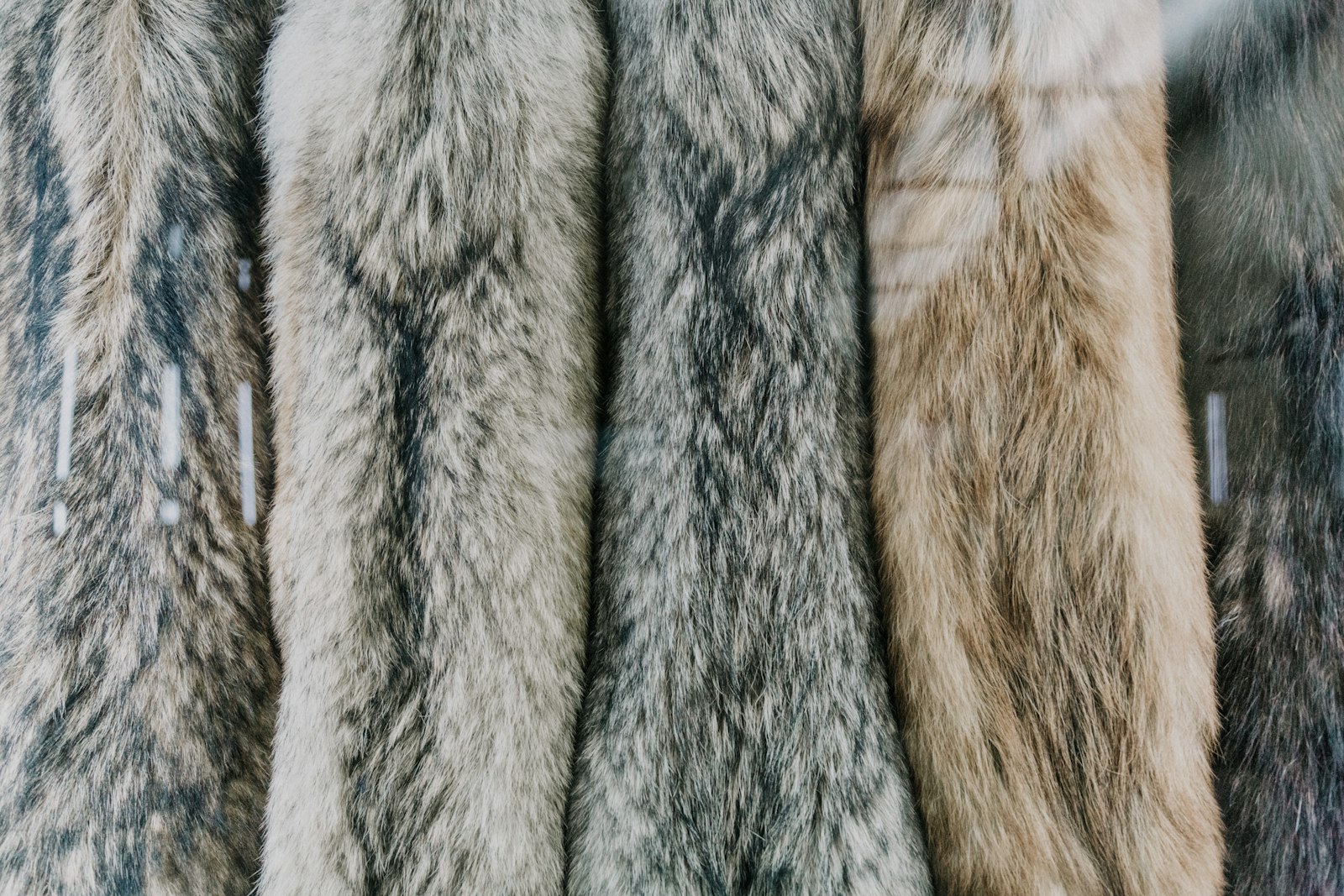
A collection does not start with a mood board. It starts in a cold room in Copenhagen in February, standing in front of several thousand pelts, with a budget and a question: what can we make from what this season has actually given us?
The auction decides the collection
We buy at audited Nordic auctions, by hand and in person, because the pelts that will become a coat cannot be chosen from a catalogue. The best batches in any year are small, and they are sold in minutes. What we come home with shapes everything that follows.
This is why no two Furixé collections open the same way. A season with an exceptional run of one pelt becomes a season of that pelt. We would rather follow the material than impose a theme on it.
From batch to garment
Each batch becomes a small number of pieces, never a large one. The constraint is not sales — it is that a colour run of forty pelts will produce perhaps six coats before the texture stops matching, and after that you are mixing grades.
So the collection is built backwards from what the pelts can support. A batch of six becomes four coats and two hats. The hat is not an afterthought; it is how the last of a good batch gets used rather than wasted.
- Pelts selected by hand at auction, never from a catalogue
- Each batch yields a fixed, small number of pieces
- Remnant pelts become hats, gilets and trims rather than being discarded
- No style is repeated if the pelt that defined it is not available again
Meant to be inherited
We design for a garment's second owner, not just its first. That means closures that can be adjusted rather than replaced, linings that can be re-cut, and seams with enough allowance to be taken in or let out a size in either direction.
It is a strange brief for a collection — designing for someone who has not been born yet, or who will receive the piece from an estate. But it is the only brief that has ever made sense to us, and it is why a Furixé coat is priced the way it is. You are not buying a season.