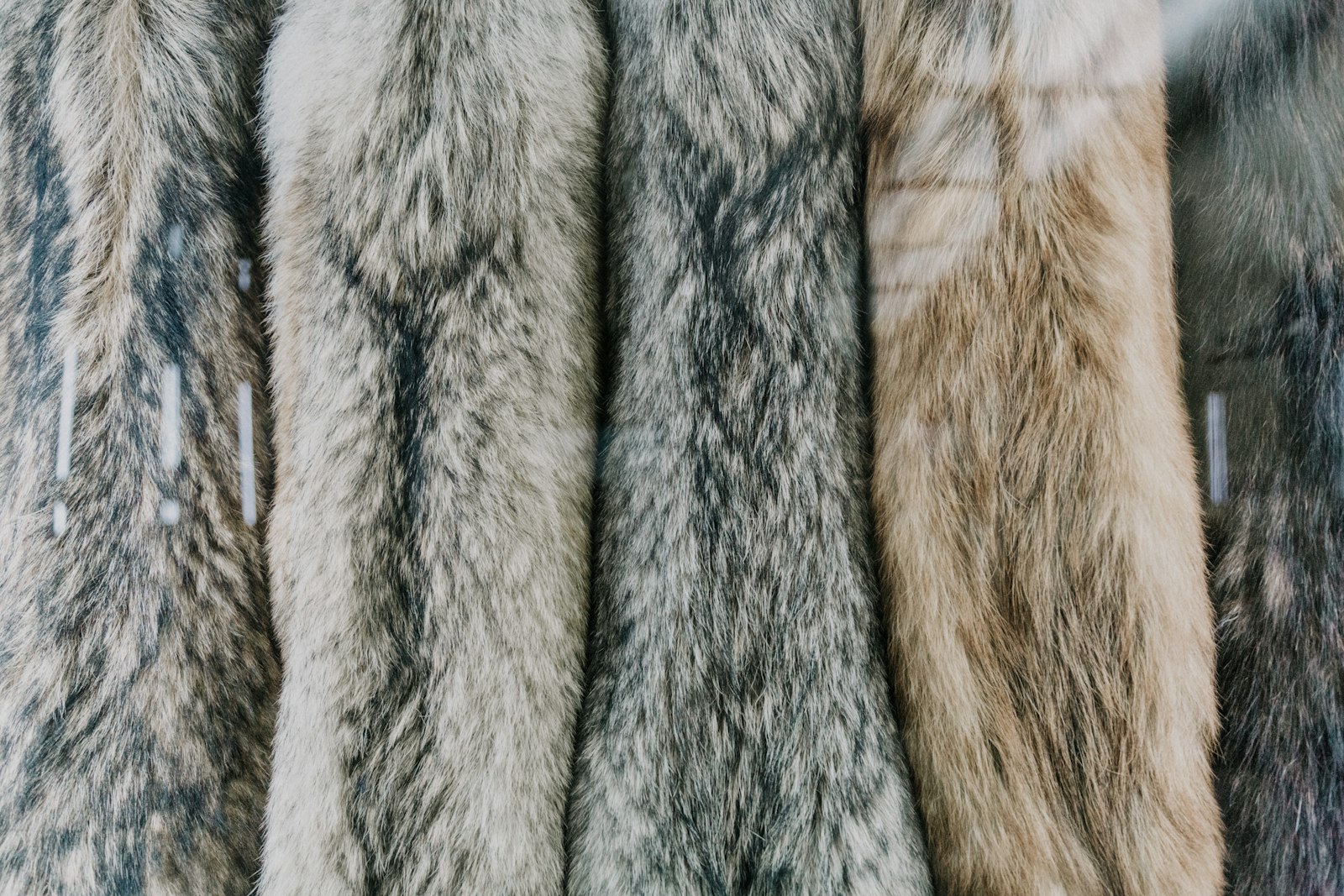
A coat that looks like fur on a screen can feel like plastic in your hands. That gap costs buyers real money: a mislabeled faux piece sold as genuine, a genuine piece priced like a synthetic, or a coat that sheds, mats or flattens after one winter because the construction was never built to last. The confusion is understandable. Modern synthetics are engineered to mimic the sheen, pile length and color variation of mink, fox and sable, and at arm's length the difference can genuinely disappear. The tells show up in the details — how the fibers move, what sits behind them, and how the coat is put together. This guide breaks down the hands-on tests that separate a real fur vs faux fur coat, what those results mean for warmth and longevity, and how hand-sewn construction changes what you should look for at the seams.
Why the Real Fur vs Faux Fur Coat Question Matters More Than Ever
Synthetic pile has improved dramatically. Today's faux can replicate guard hair length, underfur density and even the slight color shift real pelts show in daylight. That progress is good for shoppers who want the look without animal material — and it is exactly why you can no longer trust appearance alone.
The stakes are practical, not just ethical. Real fur and faux fur behave differently in cold, in rain, and across years of wear. Real fur pelts trap air in dense underfur and shed water from naturally oily guard hairs. Synthetic pile is typically plastic fiber anchored to a woven backing, so it insulates less per unit of thickness and tends to mat where it rubs.
Knowing which one you are holding lets you judge a price honestly, care for the coat correctly, and avoid the most common disappointment: a coat that looked right in the store and collapsed by February.
Five Tests You Can Run in Under a Minute
You do not need a lab. These checks work in a fitting room, at a vintage market, or with a coat already in your closet. Run them in order — the first two usually settle the question on their own.
- The touch test: Rub the pile against the nap with your palm. Real fur feels cool and slightly oily at first contact, then warms to your skin. Faux feels dry and warms almost instantly because plastic fibers hold less air. Real fur also springs back when you press it; synthetic pile stays flattened longer.
- The base inspection: Part the fur down to the root and look at what the hairs grow out of. Real fur emerges from a leather or skin pelt — you will see a soft, slightly irregular hide. Faux fur is stitched or tufted into a woven fabric backing that looks like canvas, mesh or knit. This single check is the most reliable field test there is.
- The pull test: Pluck one or two loose hairs from an inconspicuous spot. Real fur hairs taper to a fine point and have a visible root. Synthetic fibers are usually uniform in thickness along their length and end bluntly, sometimes with a slight curl from heat-setting.
- The burn test: Only on a single shed fiber, and only somewhere safe. Real fur smells like burning hair — the same smell as a singed strand of your own. Synthetic fiber melts, beads at the tip and smells like burning plastic. Never hold a flame to a finished coat.
- The density and weight check: Lift the coat. Real fur carries weight in the pelt and underfur, and the pile feels dense enough that you cannot easily see the base when you brush it apart. Faux fur is often lighter than it looks, and you can usually glimpse the backing through the pile.
What the Backing Tells You That the Surface Cannot
Turn the coat inside out. This is where the honest answers live, because the inside of a garment is expensive to fake convincingly.
On a genuine fur coat, you should see pelts joined together. Each pelt is a distinct piece of hide, and a skilled furrier matches them for color, density and direction of nap so the seams disappear from the outside. You may see narrow strips of reinforcing tape along the seams and a lining that is hand-finished rather than serged.
On a faux coat, the interior is typically a single continuous sheet of backing fabric, or panels sewn together like any other textile. The seams are standard garment seams. There is nothing wrong with that construction for what it is — but it tells you plainly that you are looking at fabric, not pelts.
Real Fur vs Faux Fur Coat: How They Compare Where It Counts
Once you know which material you are holding, the next question is whether it suits how you actually live. The trade-offs are real in both directions.
- Warmth per unit of thickness | Traps air in dense underfur; warm at moderate weight | Insulates less; usually needs bulk or a lining to match | Real fur wins in cold, faux wins in mild climates
- Water and snow behavior | Oily guard hairs shed moisture; recovers when dried properly | Absorbs water, can mat and freeze stiff | Real fur handles wet winters better with correct care
- Lifespan | Decades with storage and occasional conditioning | Typically a few seasons before pile mats or sheds | Real fur costs more upfront and lasts far longer
- Repairability | Furriers can re-line, re-size, repair pelts and restyle | Limited; worn pile generally cannot be restored | Real fur can be altered and handed down
- Care routine | Professional cleaning, cold storage, avoid prolonged heat | Gentle cold wash or spot clean depending on fiber | Faux is easier day to day, real fur rewards routine
- Price and value | Higher upfront; holds value as a crafted garment | Lower upfront; depreciates quickly | Judge by cost per winter, not sticker price
Why Hand-Sewn Construction Changes the Verdict
Material is only half the story. Two coats cut from comparable pelts can perform completely differently depending on how they were assembled, and this is where hand-sewn work separates itself.
Hand-sewing lets a furrier work with the natural stretch and direction of each pelt rather than forcing hide through a machine. The result is a coat that moves with you, hangs without pulling, and keeps its shape at the shoulders and hem — the two places where cheap construction shows first.
It also makes the coat adjustable later. A hand-sewn garment can be let out, taken in, re-lined or restyled because the seams were built to be opened and reworked. Machine-set fur often cannot survive that process.
- Seam matching: A furrier aligns nap direction and color across every pelt joint so the coat reads as one continuous surface.
- Hand-finished lining: Linings are set by hand so they hang freely and can be removed for future repair without damaging the pelts.
- Reinforced stress points: Shoulders, armholes and closures get extra attention because those are where fur garments fail.
- Restyling potential: A well-made coat can be shortened, re-collared or re-sized years later instead of being replaced.
Where Faux Fur Fits — and Where It Does Not
Faux fur is a legitimate choice, and it is the right one for many buyers. It is typically the more affordable option, it can be cleaned more casually, and it comes in colors and prints that real pelts do not produce.
Where faux falls short is durability and cold-weather performance. Synthetic pile mats where it rubs against seatbelts, bag straps and coat hooks, and once the pile is crushed it generally stays crushed. If you want a statement piece for a few seasons, that trade-off may be fine. If you want a coat you wear every January for twenty years, it is not.
The practical rule: buy faux because you want faux, and buy real fur because you want a garment built to be repaired and inherited. The mistake is paying real-fur money for a synthetic coat because the label or the seller was vague.
Buying Checklist: What to Confirm Before You Pay
Bring this list to any purchase, whether you are buying new, at auction, or from a vintage dealer.
Ask directly what the material is and get the answer in writing on the receipt or listing. A seller who knows fur will answer without hesitation. Vagueness — 'fur-like,' 'fur blend,' 'premium pile' — is your signal to inspect harder.
Check the label for fiber content and origin. Genuine fur garments are typically labeled with the species and country of origin. Synthetic garments list fiber percentages like any textile.
Inspect the interior seams and the lining attachment. Then hold the coat up to daylight and look along the surface for patchiness, thin spots or mismatched panels — the marks of a coat assembled from leftover pieces.
Finally, ask about care and repair. A seller who can explain how to store the coat and who can service it later is selling you a garment, not just a transaction.
Frequently Asked Questions (FAQ)
- Can you tell real fur from faux fur just by looking? — Not reliably. Modern synthetics copy sheen, pile length and color variation closely. The dependable tells are the base of the hairs, the backing material and how the fibers behave when pressed or pulled.
- Is the burn test safe to do on a coat? — Only on a single fiber that has already shed, held with tweezers over a fireproof surface. Never apply flame to a finished garment, and never test a coat you do not own.
- Does real fur shed more than faux fur? — Real fur sheds a small amount of underfur, especially when new or after storage. Faux fur sheds synthetic fibers continuously as the pile abrades, and that shedding tends to increase with wear rather than settle down.
- How can I tell if a fur coat is hand-sewn? — Look at the interior seams and the lining. Hand-sewn fur shows pelts joined with careful nap matching, hand-set linings and reinforcing at stress points. Machine-set fur shows uniform, rigid seams and a lining attached like standard garment construction.
- Is a real fur coat worth the higher price? — It depends on how long you intend to wear it. Real fur costs more upfront but can be cleaned, repaired, re-sized and restyled over decades, which lowers its cost per winter. Faux costs less initially and is typically replaced after a few seasons.
- How should I store a real fur coat between winters? — Keep it cool, dark and dry, on a broad padded hanger, away from plastic bags that trap moisture and away from prolonged heat. Professional cleaning before storage protects the pelts and the lining.
Conclusion
Telling real fur from faux comes down to three things: what the hairs grow out of, how the fibers respond to touch and heat, and how the coat was assembled. Run the base inspection first, confirm with the touch and pull tests, then read the interior seams — those checks will tell you more than any label or sales pitch. Once you know what you are holding, you can judge the price honestly and choose the coat that fits how you actually wear it.
Explore Hand-Sewn Fur at Furixe
Furixe has been cutting and hand-sewing fur hats and coats since 1968, working with pelts selected for density, color and nap. If you are weighing a real fur vs faux fur coat for your own wardrobe, our team can walk you through the materials, the construction and the care each piece requires. Browse the current collection or reach out with your questions before you commit.