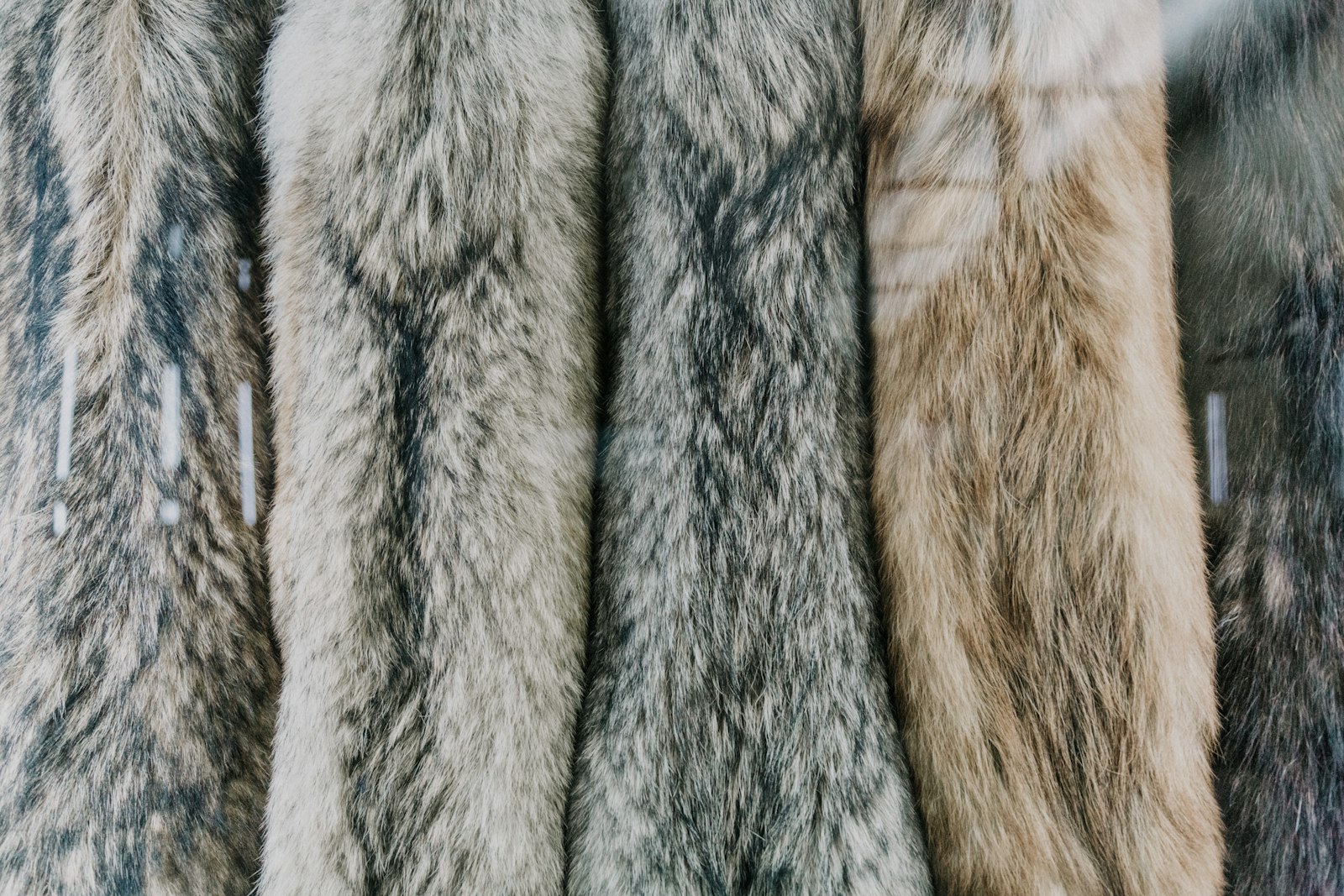
A fur coat is one of the few purchases you can reasonably expect to own for decades. That longevity is exactly why the wrong one is so expensive: a coat cut from weak pelts or closed with rushed machine stitching will show its age in three winters, not thirty. The difference between a coat that lasts and one that doesn't usually comes down to construction. A hand-sewn fur coat is built pelt by pelt, with each skin matched for color, density and direction of hair, then joined with stitches a machine cannot place. That work is slow, and it is the reason a well-made coat drapes the way it does. This guide breaks down what to inspect before you buy: how to read a pelt, what the inside of the coat tells you, how to judge fit and lining, and which questions separate a knowledgeable seller from a hopeful one.
Start With the Pelts, Not the Price Tag
Every other quality signal in a fur coat is downstream of the pelts themselves. Before you look at stitching or lining, run your hand across the coat from shoulder to hem and pay attention to what your fingers report.
Good pelts feel dense and slightly springy, with the underfur packed tightly beneath the guard hairs. If your hand sinks through to a thin, flat base, the skins are sparse and the coat will wear through at the elbows and shoulders first.
- Density: Press the fur against the nap. Quality skins resist your hand and spring back; thin skins flatten and stay flat.
- Guard hair length: Uniform guard hairs across the whole coat signal matched pelts. Patchy variation means the maker worked around weaker skins.
- Underfur: Part the fur and look at the base. A thick, woolly underfur is what holds warmth and gives the coat body.
- Luster: Healthy fur reflects light softly. Dull, chalky or overly shiny patches can indicate dryness or chemical processing.
- Shedding test: Run your palm against the nap, then check your hand. A few loose hairs are normal on new fur; clumps are not.
Why Hand-Sewing Changes How a Coat Wears
Machine-sewn fur is faster and cheaper, and it shows. Machines pull the skins tight against each other, which flattens the nap along every seam and creates a stiff, boardy feel across the back and shoulders. Hand-sewing lets the maker control tension stitch by stitch so the fur keeps its natural loft.
The technique also matters for repair. Hand-sewn seams can be opened and re-closed by a furrier without cutting into the pelts, which is what makes restyling, resizing and panel replacement possible years later. A machine-sewn coat often cannot survive that work.
- Turn the coat inside out: Look at the leather side of the seams. Hand-sewn seams sit flat and even; machine seams look like a tight, uniform track of perforations.
- Check seam flexibility: Gently flex a shoulder seam. It should move with the coat, not crackle or resist.
- Look for puckering: Ripples along a seam mean the skins were pulled too tight during construction.
- Inspect the armholes and collar: These are the hardest areas to sew by hand, so they reveal the maker's skill fastest.
- Ask how the coat was closed: A seller who cannot answer this question clearly is not the person who made it.
The Details That Separate a Good Coat From a Great One
Once you have confirmed the pelts and the seams, the remaining checks are about finishing. These are small things individually, but together they tell you whether the maker treated the coat as a piece of clothing or as a product to move.
Pay particular attention to the collar and cuffs. They take the most wear, and they are where shortcuts become visible first.
- Collar roll: A well-set collar curves smoothly around the neck without a hard crease at the fold line.
- Cuff and hem finish: Edges should be turned and finished cleanly, with no raw leather showing.
- Closure hardware: Hooks, rings and snaps should be securely anchored through reinforced backing, not stitched directly into the fur.
- Pocket placement: Pockets should sit flat and align with the coat's natural drape, not pull the front panel out of shape.
- Symmetry: Lay the coat flat and compare the two front panels. Uneven panels or mismatched pelts will be obvious when worn.
Read the Inside of the Coat
The lining is where a maker either commits to the coat or hides from it. A quality lining is attached so it can be removed for cleaning and repair without disturbing the pelts, and it should be generous enough that the coat never binds across the back when you move.
Ask what the lining is made of and whether it is hand-set. Silk and fine cupro are common in better coats; thin synthetic linings are a sign the budget went elsewhere.
- Attachment method: Hand-set linings are stitched at the hem and sleeves so they can be released later. Glued or stapled linings are a red flag.
- Seam allowance: There should be enough fabric at the side seams to let the coat be let out or taken in.
- Monogram or label placement: A maker's label sewn into the lining is normal. A label that looks added after the fact is worth questioning.
- Interior condition: On a pre-owned coat, check for staining, odor or previous repairs along the inside of the shoulders.
Fit Is a Construction Issue, Not a Sizing Issue
Fur does not stretch the way woven fabric does, so a coat that is too tight in the shoulders cannot be worn into comfort. It has to be altered, and alterations on fur are real work.
When you try a coat on, wear what you would actually wear underneath it. Move your arms forward, reach overhead, and sit down. A coat that restricts any of those motions will restrict them every winter.
- Shoulder fit: The shoulder seam should sit at your natural shoulder line, not beyond it and not inside it.
- Sleeve length: Sleeves should reach the wrist bone and cover the top of your hand slightly, with room for gloves.
- Back width: Cross your arms in front of you. If the coat pulls across the back, it is too narrow.
- Hem length: Full-length coats should clear the floor by an inch or two when you are in the shoes you plan to wear.
- Weight: A heavy coat is not automatically a warm one. Balanced weight across the shoulders is what makes a long coat wearable.
Questions to Ask Before You Commit
A reputable furrier will answer these without hesitation, and the answers will tell you as much as the coat itself. If a seller dodges the construction questions, treat that as information.
It also helps to know what happens after the sale. Fur needs annual conditioning and cold storage to hold its condition, and a maker who offers that service is telling you they expect the coat to last.
- Where were the pelts sourced and how were they graded? Look for a specific answer, not a general assurance of quality.
- Was the coat hand-sewn throughout, or only in certain areas? Mixed construction is common and worth knowing about.
- What is the return or exchange window? Confirm it in writing before payment.
- Do you offer cleaning, conditioning and storage? Ask how often the coat should come in.
- Can this coat be resized later? The answer depends on the seam allowance built into it.
- Is there a warranty on the stitching? Seam failure in the first seasons is a workmanship issue, not wear.
Traditional vs. Hand-Sewn Construction: What You Are Actually Comparing
Most coats on the market sit somewhere between fully machine-sewn and fully hand-sewn. This comparison is not about brand prestige; it is about what each method does to the coat over time.
- Machine-sewn | Fast, lower cost, uniform tension | Stiff seams, flattened nap, limited repair options
- Partially hand-sewn | Moderate cost, hand work at stress points | Better drape, but seams may vary across the coat
- Hand-sewn throughout | Slow, higher cost, controlled tension at every seam | Natural loft, clean drape, restylable and repairable for decades
Frequently Asked Questions (FAQ)
- How can I tell if a fur coat is hand-sewn? — Turn it inside out and look at the leather side of the seams. Hand-sewn seams sit flat with individual, slightly irregular stitches, while machine seams form a tight, uniform line of perforations.
- Is a hand-sewn fur coat worth the higher price? — It depends on how long you intend to keep it. Hand-sewn construction keeps the nap lofted, drapes better, and can be opened and re-closed for resizing or repair, which machine-sewn seams generally cannot survive.
- How long should a well-made fur coat last? — With annual conditioning and proper cold storage, a quality coat can be worn for decades and passed down. Neglect, not wear, is usually what shortens a coat's life.
- Can a fur coat be resized after I buy it? — Often yes, if the coat was built with adequate seam allowance and hand-sewn seams. Ask the maker before purchase, because the answer varies by coat.
- How should I store a hand-sewn fur coat? — Keep it out of direct light in a breathable cloth bag, away from radiators and damp basements, and have it professionally conditioned and cold-stored at least once a year.
Conclusion
Buying a hand-sewn fur coat comes down to three inspections: read the pelts for density and luster, read the seams for hand work and tension, and read the fit for room to move. Get those right and the details, from collar roll to lining attachment, confirm what you already suspect. Get them wrong and no price tag will save the coat from looking tired in a few seasons.
Talk to a Furrier Before You Decide
Furixe has been cutting and hand-sewing fur hats and coats since 1968, working with pelts selected from sources around the world. If you are weighing a purchase, bring your questions to us: we will walk you through the pelts, the construction and the fit, and tell you honestly what a coat needs to serve you for decades.