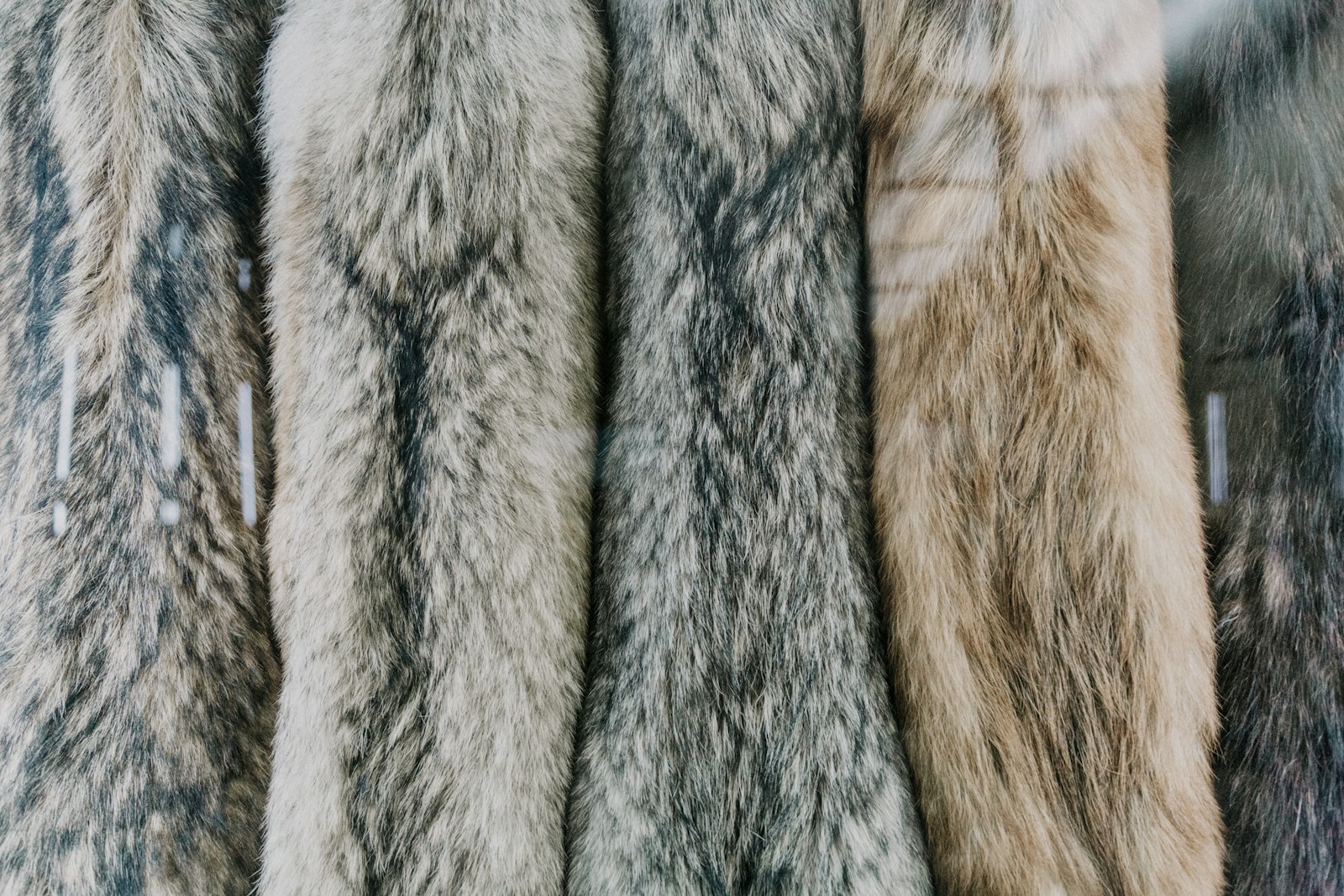
Every winter, the same decision gets made badly. You buy a coat that looks right in the shop and disappoints you in February — too cold on the walk to the car, too hot the moment you step indoors, or shedding feathers by March. A winter coat is a four-figure decision in many cases, and the wrong one costs you warmth, comfort and money you will spend again next season. The fur coat vs down parka question is the one most people never actually answer. They default to whatever is familiar, or to whatever the last salesperson recommended, without comparing how the two materials behave in wind, wet snow, and long stretches of dry cold. This guide breaks down how fur and down each handle real winter conditions, where each one genuinely wins, and how to decide based on your climate, your daily routine and how long you expect the coat to last.
Fur Coat vs Down Parka: The Short Answer
Down insulates by trapping air in clusters of feathers. Fur insulates with a dense, interlocking structure of individual hairs that also blocks wind at the surface. That single structural difference explains almost everything else in this comparison.
In dry, still cold, a high-fill-power down parka is exceptionally warm for its weight and packs down small. In wind, wet snow and freeze-thaw conditions, fur holds its performance while down loses loft when it gets damp and needs time to dry.
The honest split: down wins on weight and packability. Fur wins on wind resistance, wet-weather stability, durability across decades, and the fact that it does not need to be replaced every few seasons.
How Each One Actually Keeps You Warm
Warmth in a coat comes from trapped air, not from the material itself. The question is how reliably that air stays trapped once the weather turns.
Down clusters are nature's most efficient loft-to-weight insulator. They create a large volume of dead air for very little mass, which is why expedition parkas use down. The trade-off is fragility: down loses loft when it absorbs moisture, and once the clusters clump, the coat's warmth drops until it dries and is re-lofted.
Fur works differently. A winter pelt is a dense mat of guard hairs and underfur that traps air and sheds wind at the same time. It does not collapse when it gets damp, and it does not need to be shaken back into shape to perform.
- Down strength: Highest warmth-to-weight ratio of any common insulation.
- Down weakness: Loses loft when wet; performance depends on staying dry.
- Fur strength: Wind-blocking surface plus trapped air; stable in damp cold.
- Fur weakness: Heavier than down for equivalent warmth; bulkier to store.
Wind, Wet Snow and Freeze Thaw: Where the Two Diverge
Most winter complaints are not about temperature. They are about wind chill and moisture a 25°F day with a 20 mph wind feels far colder than a still 15°F day, and slush is harder on a coat than dry cold ever is.
A down parka relies on a shell fabric to handle wind and water. That shell is doing real work, and when it wets out, the down underneath starts to suffer. This is why down garments are usually rated with a waterproof or water-resistant shell as part of the package.
Fur handles both problems at the material level. The dense outer hair layer breaks wind, and the natural oils in the pelt help it shed light snow and moisture. It is not a raincoat no fur should be worn in a downpour but for the mix of snow, sleet and wind that defines a real winter, it stays stable.
Weight, Bulk and Everyday Wearability
This is where down earns its reputation. A good down parka folds into a stuff sack, weighs a fraction of a fur coat, and layers easily under a backpack strap or over a suit. If you commute on foot through a city, or travel frequently, that matters.
Fur is a different kind of garment. It is structured, it holds its shape, and it is meant to be worn as the outer layer, not packed away. It is also, for many people, the reason they own it — a fur coat reads as a coat, not as technical gear.
The practical test is your actual week. Count how many days you walk more than fifteen minutes in the cold, and how many days you go from a warm car or train into a warm building. The first number favors down. The second favors fur.
- Choose down if: You walk long distances, travel with carry-on only, or layer under technical outerwear.
- Choose fur if: You want one coat for the season, worn over real clothes, in and out of cars and buildings.
- Consider both if: You live somewhere with genuinely distinct cold-dry and cold-wet seasons.
Durability and Cost Per Winter
A down parka has a working life measured in seasons. Shells abrade, baffles leak, and down migrates and clumps over time. A well-made parka can be re-lofted and repaired, but most people replace them within a handful of winters.
A fur coat is built on a different timeline. Fur is a natural material with a long service life when it is properly stored and brushed, and it can be restored rather than replaced. That changes the arithmetic: the purchase price is higher, but it is spread across decades instead of seasons.
Divide the cost by the number of winters you realistically expect to wear it, and add in the cost of replacing a parka two or three times over the same period.
- Down parka: Lower upfront cost, shorter lifespan, replacement cycle every few seasons.
- Fur coat: Higher upfront cost, decades of wear with proper care, restoration instead of replacement.
- Cost per winter: Fur usually wins over a ten-year horizon; down wins if you only need one hard winter.
Care, Storage and Long Term Upkeep
Down is low-maintenance in the short term and fussy in the long term. It needs washing with the right detergent, tumble drying with dryer balls to restore loft, and careful storage so it does not compress permanently.
Fur needs less frequent intervention but more expertise when it needs it. The essentials are simple: keep it dry, hang it on a broad hanger with room to breathe, never seal it in plastic, and have it professionally cleaned and conditioned periodically.
The bigger difference is who is responsible. A parka is designed for you to maintain. A fur coat is designed to be maintained by the house that made it which is why provenance and a workmanship promise matter as much as the pelt itself.
- Down care: Wash rarely, dry thoroughly with agitation, store loose to protect loft.
- Fur care: Brush after wear, keep dry, store on a broad hanger in a breathable bag, service professionally.
- What to look for: A maker who covers storage, brushing and restoration for the life of the garment.
How Furixé Approaches the Fur Side of This Decision
Furixé has hand-sewn fur in its atelier on Copenhagen's Bredgade since 1968, and the same families of furriers have worked those benches across that time. Nothing about the process is rushed, and nothing is left to a machine.
The house buys only winter pelts, in season, directly from audited Nordic auctions, and every pelt is traceable to its audited source. Each skin is stretched, matched and graded by hand under northern light before it is considered for a garment.
Construction is done by let-out: pelts are cut into ribbons and re-sewn with thousands of invisible hand stitches, which is what gives a fur coat its fluid line rather than a patchwork look. Every finished piece then rests for a full season before it is brushed and inspected over four days, and each garment is signed with the monogram and the year of its making.
The house produces twelve pieces twice a year, ships free worldwide, and offers 30-day easy returns. The workmanship promise covers storage, brushing and restoration for as long as you own the piece which is the practical answer to the durability question above.
Fur Coat vs Down Parka: Side by Side
Use this as a quick reference when you are weighing the two against your own winter.
- Warmth in dry cold Excellent, high warmth-to-weight, Excellent, heavier for equivalent warmth
- Wind resistance Built into the material, Depends on the shell fabric
- Wet snow and damp cold Stable, sheds light moisture, Loses loft when wet, needs to dry
- Weight and packability Heavy, structured, not packable, Light, compresses small
- Lifespan Decades with proper care, A few seasons of hard use
- Upkeep Professional service, periodic, Home washing and re-lofting
- Upfront cost Higher, Lower
- Cost per winter Usually lower over ten years | Lower if you need one season
Frequently Asked Questions (FAQ)
- Is a fur coat warmer than a down parka? In dry, still cold, a high-fill-power down parka can be warmer for its weight. In wind and damp cold, fur holds its warmth more reliably because it does not lose loft when it gets wet. The right answer depends on your climate, not on a single winner.
- Can you wear a fur coat in snow? Yes. Fur sheds light snow and handles the mix of sleet and wind that defines a real winter. It should not be worn in heavy rain, and it should be brushed and dried properly after a wet day.
- How long does a down parka last compared to a fur coat? A down parka typically serves a handful of seasons before the shell or loft degrades. A fur coat, stored and serviced properly, can be worn for decades and restored rather than replaced.
- What should I look for in a fur coat if I want it to last? Winter pelts only, traceable provenance from an audited source, hand construction rather than machine sewing, and a maker who covers storage, brushing and restoration for the life of the garment.
- Which is better for city winters with a lot of walking? If you walk long distances in wet, slushy conditions, a down parka with a proper shell is the more practical daily choice. If your winter is mostly cold and dry, or you move between heated spaces, a fur coat is the more durable and more versatile answer.
Conclusion
A down parka is the right coat if you need maximum warmth for minimum weight, you walk long distances in wet conditions, or you want a lower upfront cost and accept replacing it every few seasons. A fur coat is the right coat if your winters are cold and dry or wind-driven, you want one piece that handles the season, and you are buying for decades rather than for one February. Decide with your climate and your actual week, not with the label on the rack.
Choose a Coat Made to Be Inherited
If the comparison points you toward fur, the next step is choosing one made to outlast the trend cycle. Furixé has hand-sewn fur hats and coats in Copenhagen since 1968, using only winter pelts from audited Nordic auctions and finishing each piece with a workmanship promise that covers storage, brushing and restoration for as long as you own it. Explore the current collection and see what twelve pieces twice a year actually looks like.