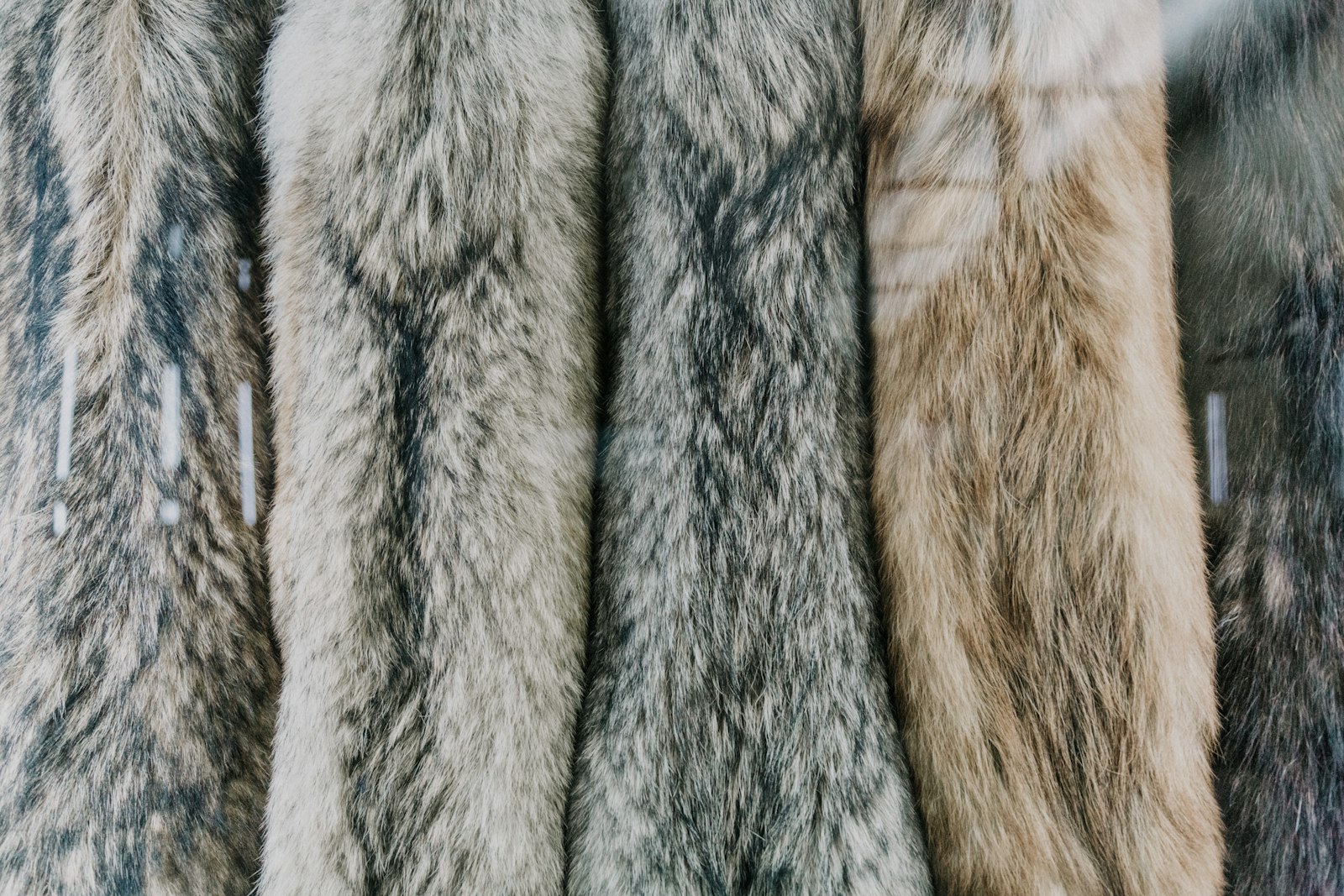
A fur coat is not a garment you replace every few seasons. It is cut once, hand-sewn, and expected to sit on your shoulders for decades — which means a measurement error of two centimetres is not a minor annoyance, it is a coat you avoid wearing. Most sizing problems do not come from the atelier. They come from a tape measure taken over a sweater, a shoulder point guessed rather than found, or a bust measurement pulled snug when it should sit easy. Fur has almost no give, so it cannot forgive the way a knit does. This guide breaks down custom fur coat sizing into five measurements you can take at home in about ten minutes, the mistakes that distort each one, and how those numbers become a finished coat that drapes the way fur is supposed to.
Why Fur Sizing Works Differently From Ready-to-Wear
Ready-to-wear clothing is built on a block: a standard body, graded up and down. Fur is built on you. Because the pelt is cut to a pattern rather than stretched over one, there is no seam allowance to let out later and no fabric memory to pull a loose coat back into shape. When preparing your measurements, exploring our official size guide provides additional context on standard atelier dimensions.
That rigidity is the whole point. It is also why custom fur coat sizing rewards accuracy far more than shopping for a size label ever does. A coat that is one size too large will hang from your shoulders instead of following them, and the extra volume reads as weight rather than warmth. Achieving an ideal custom fur coat fit depends entirely on these baseline numbers.
The measurements below are the same ones a furrier takes in person. Taken carefully at home, they give an atelier everything needed to draft a pattern.
- No stretch: Fur and fur-backed linings hold their shape, so a measurement that is too tight stays too tight.
- Shoulder-driven fit: Fur hangs from the shoulder line, not the waist, so shoulder width sets the entire silhouette.
- Volume is designed, not accidental: Ease is added deliberately at the pattern stage, which is why your body measurements should be taken close to the body.
What You Need Before You Start Measuring
Ten minutes of preparation prevents the most common source of error: measuring over the wrong layer. You want your true body measurements, not the measurements of your body plus a parka. Following a proper fur coat measurements guide ensures you get it right on the first try.
Work in front of a full-length mirror if you have one, and ask someone to help with the back and shoulder measurements. A second pair of hands is the single biggest accuracy upgrade available to you.
- A flexible cloth tape: A stiff builder's tape will not follow the curve of a shoulder.
- Light clothing: A thin shirt or a fitted base layer. No knits, no belts, no padded bras you would not wear under the coat.
- A mirror and a helper: Useful for shoulder width, essential for back length.
- A pen and paper: Write each number down as you take it, in centimetres or inches — but stay consistent.
The Five Measurements That Define a Fur Coat
Every custom fur coat pattern comes down to five numbers. Take them in this order, because each one is easier once the previous one is marked.
- 1. Bust or chest: Run the tape around the fullest part of your bust, under the arms, and across the shoulder blades at the back. Keep the tape level and parallel to the floor. It should touch but not compress — you should be able to slide a finger under it.
- 2. Shoulder width: Find the bony point where each shoulder meets the arm. Measure straight across the back from point to point. This is the measurement most often taken too wide, and it is the one that decides whether a coat looks tailored or borrowed.
- 3. Sleeve length: Start at the same shoulder point, run the tape over a slightly bent elbow, and finish where you want the cuff to sit — typically just past the wrist bone for a full-length coat. Measure with the arm relaxed, not extended.
- 4. Back length (nape to hem): From the prominent bone at the base of your neck, measure straight down the spine to where you want the hem. For a full-length coat this is usually mid-calf; for a hip-length style, the top of the thigh.
- 5. Hip or sweep: Around the fullest part of your hips, roughly 18 to 23 cm below the natural waist. Fur coats flare below the waist, so this number tells the furrier how much sweep the pattern needs.
How to Take Each Measurement Without Distorting It
Knowing which five numbers matter is half the job. Taking them so they reflect your actual body is the other half, and it is where most home measurements drift.
- Bust: Breathe normally. Do not inhale and hold — a chest measurement taken on a full breath can run several centimetres large, and fur will not shrink back.
- Shoulder: Measure the back, not the front. Standing in front of a mirror and measuring across your chest gives a number that is too wide every time.
- Sleeve: Take the measurement on your dominant arm and note it. If your arms differ, tell the furrier; a good pattern accommodates it.
- Back length: Stand straight with your weight even on both feet. Slouching shortens the spine and produces a coat that sits higher than you intended.
- Hip: Keep the tape loose enough to sit flat against the body. Pulling it tight compresses soft tissue and under-reports the sweep you need.
Common Measuring Mistakes That Ruin a Custom Fur Coat
These errors show up again and again in made-to-measure outerwear, and each one produces a specific, predictable fit problem.
- Measuring over bulky clothing: Adds phantom volume to the bust and hip, producing a coat that swallows you.
- Pulling the tape tight: Under-reports circumference. In a fabric with no give, a tight measurement becomes a coat you cannot raise your arms in.
- Guessing the shoulder point: The most consequential error. A shoulder that is 2 cm too wide drops the sleeve head and makes the whole coat look a size too big.
- Measuring a favourite coat instead of your body: Useful as a cross-check, misleading as a primary source — that coat already contains its own ease.
- Mixing units: Convert everything to one system before you send it. Half in inches and half in centimetres invites a transcription error.
How Your Measurements Become a Finished Coat
Your numbers are not the pattern. They are the starting point. A furrier reads them alongside your height, posture and the style you have chosen, then drafts a pattern that adds ease where a fur coat needs it — across the back, through the armhole, and below the waist — and removes it where it would add bulk. Comparing your figures with a standard fur coat size chart gives a helpful reference point.
This is also where the choice of fur matters. Long-haired furs such as fox carry more visual volume, so patterns are cut closer to the body to compensate. Shorter, denser pelts can be cut with more sweep without looking heavy. Whether you are tailoring a coat or choosing handcrafted fur hats for women, accurate measurements ensure total harmony across your outfit. Share the style you have in mind when you send your measurements so the pattern is drafted for the right material.
Getting a Second Opinion Before You Commit
Before your measurements go to the atelier, have someone re-take the shoulder width and back length. Those two numbers are the hardest to self-measure and the most expensive to get wrong.
Comparing Against an Existing Coat
If you already own a coat that fits you well, lay it flat and measure it across the shoulders and from nape to hem. Compare those figures against your body measurements — the difference is the ease built into that coat, and it is useful context for the furrier.
Frequently Asked Questions (FAQ)
- Can I take my own measurements without help?
- Yes for bust, sleeve and hip. For shoulder width and back length, a helper makes a meaningful difference, because both require you to stand naturally while the tape is read from behind.
- Should I measure in inches or centimetres?
- Either works, as long as you stay consistent throughout and label the unit clearly. Centimetres give slightly finer resolution, which helps on shorter measurements like shoulder width.
- What if I am between two sizes?
- Send both sets of numbers and note the styles you are considering. Because a custom fur coat is drafted rather than graded, the furrier can cut between the two rather than forcing you into one.
- How much ease should a fur coat have?
- Enough to layer a thin sweater underneath and raise your arms comfortably, but not so much that the coat hangs away from your shoulders. This is a pattern decision, not something you add to your body measurements.
- Do I need to measure again if I order a second coat?
- Yes, particularly if more than a year has passed or your weight has changed. Fur patterns are cut to the numbers on file, and old numbers produce old fits.
Conclusion
Furixe has been cutting and hand-sewing fur since 1968, working from your measurements rather than a size label to craft a bespoke made to measure fur coat. Explore more about Furixe to understand our heritage and service standards. When you are ready, send us your five numbers along with the style you have in mind through our contact page. Our team will review them, flag anything that looks off, and guide you through the options before a single pelt is cut.
Start Your Made-to-Measure Fur Coat
and our return poli